
🎧 TOEIC Listening Part 1: When the Photo Isn’t the Answer
Why do so many get TOEIC Part 1 wrong? It's not a photo game; it's a listening test designed to trap you with subtle language. Discover how to stop focusing on the obvious and instead train your ears to catch critical grammatical details and avoid common pitfalls, transforming your Part 1 score.
It seems simple.
A photo.
Four sentences.
Choose the one that matches.
So why do so many people get these wrong?
Because the TOEIC Part 1 photo is not a picture book. It’s a trap.
And the sentences? They're not describing the obvious — they’re testing how you listen under pressure.
🖼️ It’s Not About the Photo. It’s About the Language.
Most people try to look at the picture and wait for the matching sentence.
But Part 1 isn’t testing vision — it’s testing how well you process micro-details in English.
In fact, many wrong answers sound “about right.”
Let’s look at what makes this section hard:
Words you rarely hear in daily conversation (e.g., “adjusting,” “extending,” “positioned”)
Sentences that look right in the picture, but are grammatically false
Distractors that are almost true, but one word is wrong (e.g., “The woman is holding a tray” vs. “The tray is being held by the man”)
🧩 Most Test Takers Fail Here:
They do what students do — focus on what they see.
But the test rewards test takers — those who can:
Catch passive voice under time pressure
Notice plural vs. singular
Hear verb tense instantly
Ignore “obvious” answers and focus on structure
🎯 Strategy Over Guesswork
To win in Part 1, strategy matters more than vocabulary.
Here’s how top scorers train:
Learn the patterns
👉 Participle phrases (e.g., “The woman is seated at the table.”)
👉 Passive voice (e.g., “The chairs have been arranged.”)Train by ear, not by eye
👉 Don’t look at the photo first. Just listen and decide if the sentence is possible or impossible.
👉 Then check the image.Group similar phrases
👉 Compare: “holding / held / being held”
👉 Compare: “stand / stood / standing”Listen for what’s not there
👉 A tree in the background? Not important.
👉 A man near a car? Maybe important.
👉 A sentence saying “is getting into the car”? Think about timing.
🛠️ Part 1 is a Listening Test. Not a Photo Game.
The photo is there to distract — not to guide.
Part 1 is about accuracy under pressure, grammar under time, and hearing detail in chaos.
The best test takers don’t look harder.
They listen smarter.
Want to Learn More?
Our blog is full of practical strategies that help test-takers like you build better habits, overcome common blocks, and improve TOEIC scores through smarter, easier methods. Try our free TOEIC Block quiz now!

🎧 TOEIC Listening Part 3 Strategy: Conquer Conversations
In TOEIC Part 3, many get lost trying to understand everything. It's not a memory test; it's about strategic hunting for clues. Discover how to conquer Part 3 by reading questions first, following the conversation's flow, and making quick decisions, just like navigating a busy train station.
In TOEIC Part 3, you're dropped right into a conversation — no warm-up, no context.
Three voices, a question, and a timer already running.
This section is where many test-takers lose their rhythm. Not because they don’t understand English — but because they don’t understand how the game works.
🧭 Think of It Like Navigating a Busy Train Station
Imagine this: You’re in a crowded train station.
Announcements echo over the speakers.
You’re not trying to understand every word — you’re listening for your platform, your train, your time.
That’s Part 3.
It’s not about catching every sentence.
It’s about spotting the clues you need — and ignoring the rest.
🎯 The Problem: Students Listen, Test-Takers Hunt
Students try to follow the whole conversation.
Test-takers know better.
They use the three key strategies:
1. 📋 Read the Questions First — Before the Audio Starts
The biggest mistake? Waiting to hear the conversation before looking at the questions.
Smart test-takers scan the questions while the narrator says:
“Questions 41 through 43 refer to the following conversation.”
That’s your prep time.
Find out:
Who are the speakers?
What’s the situation?
What keywords should you expect?
This is like checking the train schedule before listening for your train.
2. 🧠 Don’t Translate — Follow the Flow
Trying to translate in your head slows you down.
Instead, stay in the moment:
Listen for tone: Is the speaker happy? Frustrated?
Track changes: “Actually…” or “But…” means something shifted.
Focus on roles — who is asking, who is deciding, who is explaining?
You don’t need every detail.
You just need to follow the action.
3. ⏱️ Choose Fast, Then Let Go
Once the audio ends, trust your gut.
If you were active during the listening, the right answer will feel obvious.
If you’re stuck between two choices, pick quickly. Don’t waste time re-reading.
Why?
Because the next conversation is already on the way.
Keep your pace.
🚦The Truth: It’s a Listening Game, Not a Memory Test
Part 3 is not about remembering word-for-word.
It’s about strategic listening.
You’re listening with a mission — like scanning for your train in a noisy station.
When you prepare before the audio, follow the flow, and trust your instincts,
you don’t just “survive” Part 3.
You conquer it.
Want to Learn More?
Our blog is full of practical strategies that help test-takers like you build better habits, overcome common blocks, and improve TOEIC scores through smarter, easier methods. Try our free TOEIC Block quiz now!

🕒 TOEIC Reading Time Management Mastery: Play the Game
Running out of time on TOEIC Reading isn't about bad English; it's about treating the test like a reading exercise instead of a game. Discover how to master time management for Parts 5, 6, and 7, playing strategically like a pro athlete to maximize your score and beat the clock.
Most people fail the TOEIC Reading section for one simple reason:
They treat it like a reading test… instead of a game.
In a real match — whether it's basketball, soccer, or chess — you don’t just “try your best” and hope it works out.
You use a strategy. You plan your timing. You adapt your moves.
TOEIC Reading is no different.
🎮 The Problem: Running Out of Time
Let’s be honest — even good readers often run out of time before they reach Part 7.
They read carefully. They think deeply.
And then… the clock runs out.
This isn’t because they’re bad at English.
It’s because they’re playing the wrong game.
🧠 Part 5: The Fast Break
Think of Part 5 as the opening moves — a chance to grab early points.
Don’t get stuck.
Aim for 30 seconds or less per question.
Don’t over-analyse. Trust your first instinct if you know the grammar or vocab.
If you spend 15 minutes here? You’ve already lost the match.
📘 Part 6: Midfield Momentum
Now the pace shifts.
Each set has a theme. Each blank fits into a bigger flow.
Scan the sentence before and after the blank.
Watch out for tone, transitions, or time references.
Don’t rush — but don’t let it slow your whole game down.
📄 Part 7: The Endgame
This is where most players lose.
The texts are longer. The choices more similar.
Your energy is lower. The pressure is higher.
That’s why you need a plan before you get there.
Skim the questions first, then hunt the answers.
Start with single passages, then move to double and triple.
If one question is taking too long? Move on.
🎯 The Strategy That Wins
Great test-takers don’t try to get every point.
They aim to score as many as possible in the time they have.
It’s not about reading everything perfectly.
It’s about playing the game with control.
Like a pro athlete:
They know the timing.
They know their moves.
They keep their energy until the final whistle.
💬 Want to Stop Running Out of Time?
The problem usually isn’t your English.
It’s your time habits.
My TOEIC Coach uses Accelerated Learning Technology (ALT) to train you like an athlete:
Fast decision-making
Test pacing practice
Error recovery training
That’s how you stop running out of time.
That’s how you play to win.
Want to Learn More?
Our blog is full of practical strategies that help test-takers like you build better habits, overcome common blocks, and improve TOEIC scores through smarter, easier methods. Try our free TOEIC Block quiz now!

The “Messy” TOEIC Test: How to Make Smart Decisions Without All the Answers
Indecision is a trap. Inspired by The Hard Thing About Hard Things, this article reveals how to make smart, confident decisions on a "messy" TOEIC test, even with incomplete information. Learn the "Guessing with a Stop-Loss" habit to beat The Over Thinker and Speed Trap blocks.
“There is no perfect decision. You just make the best move with what you’ve got.”
Ben Horowitz writes this in The Hard Thing About Hard Things.
He’s talking about leading a startup in chaos.
But if you’ve ever been stuck in TOEIC Part 5 or Part 7,
you know exactly how it feels.
You’re halfway through a question.
You don’t know every word.
The clock is ticking.
You hesitate.
“What if I guess wrong?”
“What if I miss something?”
And just like that — you’re trapped.
Welcome to The Over Thinker Block and The Speed Trap Block in one brutal combo.
But here’s the truth:
TOEIC is designed to be messy.
And you can still win.
The Test Is Messy — So You Need a Messy Decision-Making Skillset
At MTC, we coach this simple truth:
TOEIC isn’t about being perfect.
It’s about being effective in uncertainty.
Horowitz explains that business leaders often have to make critical decisions
without complete information.
Waiting for the “perfect answer” is how companies die.
TOEIC rewards the same mindset.
If you’re aiming for perfection,
you’ll lose precious time,
doubt yourself,
and panic as the clock drains.
But if you learn to make smart, calculated guesses —
you stay in control.
MTC Truth: You Don’t Need to Know Everything — You Need to Act with What You Do Know
In Part 5 and Part 7,
there will always be words you don’t know.
That’s not a failure.
It’s part of the game.
Top scorers don’t panic when they hit an unknown word.
They pivot.
They scan the sentence structure.
They eliminate obvious wrong answers.
They make a confident guess — and move on.
This isn’t “reckless guessing.”
It’s strategic decision-making under pressure.
ALT Habit: “Guessing with a Stop-Loss” — Making Confident Decisions Under Pressure
Here’s how to build this decision-making reflex:
What to Do:
When faced with an uncertain question (especially in Part 5 or 7),
give yourself a 10-second decision window.Eliminate one or two impossible options.
Make a best-effort guess based on sentence flow or known patterns.
Mark it and move on.
Stop-Loss Rule:
If after 10 seconds you still don’t feel confident,
force yourself to choose the best guess and cut your losses.
Why It Works:
It prevents time bleed. You stop wasting time on low-return questions.
It builds decision-making speed. You train your brain to process what’s there, not fixate on what’s missing.
It reduces emotional drain. You stay calm and in control, even in messy situations.
Making Smart Moves in Messy Situations is a Life Skill
Horowitz’s point is clear:
Success isn’t about always having the right answer.
It’s about being able to act when answers are incomplete.
TOEIC is a small version of this bigger life challenge.
When you train yourself to decide,
to stay calm in uncertainty,
you’re not just improving your test score.
You’re building a mindset that wins in business, career, and life.
The messy parts are where you grow.
Want to Learn More?
Our blog is full of practical strategies that help test-takers like you build better habits, overcome common blocks, and improve TOEIC scores through smarter, easier methods. Try our free TOEIC Block quiz now!

🕵️ TOEIC Part 5 Strategy: Solve the Case with One Word
Many TOEIC learners get stuck on Part 5 by overthinking and trying to translate everything. Discover how to treat Part 5 like a detective case, quickly spotting clues and trusting your judgment to solve each "mystery" with one word, boosting your score and speed.
Part 5 questions might look short.
But they’re trickier than they seem.
Each sentence has a hole — and four options to fill it.
It’s like a mini mystery.
And the goal isn’t to read everything.
It’s to solve the case — fast.
🕵️♂️ Think Like a Detective, Not a Language Student
In school, we were told to read carefully, understand everything, and think deeply.
But on the TOEIC test, that will slow you down.
Imagine you're a detective. You walk into the room, and someone says:
“Here’s the scene. You’ve got 30 seconds. What’s your move?”
You don’t sit down to analyse every book on the shelf.
You scan for fingerprints. You look for key details.
You move fast, and you trust your training.
That’s Part 5.
🔍 What Kind of Clues Are You Looking For?
Each question gives you just enough information to make the right choice.
You don’t need to understand the full sentence — just the part that matters.
There are three main types of clues:
1. Grammar Clues
Look for word form, subject-verb agreement, prepositions, etc.
🧠 Clue: “The report ___ by the manager.”
🧩 Options: a. writes / b. wrote / c. is written / d. writing
💡 Answer: is written (passive form)
2. Logic Clues
You need to judge how parts of the sentence connect — like cause and effect, contrast, or condition.
🧠 Clue: “He was late, ___ he left early.”
🧩 Options: a. because / b. although / c. so / d. if
💡 Answer: although (contrast)
3. Vocabulary Clues
Some questions test your word choice — but always within a pattern or fixed phrase.
🧠 Clue: “We apologize ___ the delay.”
🧩 Options: a. on / b. to / c. for / d. at
💡 Answer: for
🧠 Strategy = Speed + Accuracy
Don’t try to understand every word.
Don’t translate.
Don’t reread the whole sentence 3 times.
Instead:
Look for the hole — what kind of word is missing?
Scan for clues — what part of the sentence controls the choice?
Choose the best option — trust your logic and keep moving.
It’s not about being perfect.
It’s about being effective.
🚨 Common Trap: Too Much Thinking
Most learners stuck in Part 5 are actually overthinking.
They treat every sentence like a reading test.
But Part 5 is really a judgment test.
The right answer is usually clear — if you don’t second-guess yourself.
✅ Your Part 5 Mission
If you want to improve:
Practice judging, not translating
Focus on patterns, not memorization
Use a timer — train for speed
Review mistakes by type (grammar / logic / vocabulary)
You don’t need more English.
You need better pattern recognition.
Train like a test-taker — not like a student.
Be the detective.
Get in, spot the clue, solve the case.
That’s how you win Part 5.
Want to Learn More?
Our blog is full of practical strategies that help test-takers like you build better habits, overcome common blocks, and improve TOEIC scores through smarter, easier methods. Try our free TOEIC Block quiz now!

🎧 TOEIC Part 2 Strategy: Master Judgment, Win with One Word
Struggling with TOEIC Part 2 even when you understand the audio? It's not a listening test, it's a reaction test. Discover why overthinking hurts and how to master Part 2 by focusing on instant judgment and pattern recognition with Accelerated Learning Technology (ALT), not just comprehension.
Most people try to understand the words.
But Part 2 doesn’t reward understanding — it rewards judgment.
It’s not a listening test. It’s a reaction test.
Imagine a game show buzzer.
You get one second. Three choices. And the only way to win is to pick the one that fits, not the one that sounds familiar.
That’s Part 2.
🧠 Understanding Isn’t Enough — You Have to React
Many learners think:
“I know what they said, but… I still chose the wrong answer.”
That’s not a language problem.
It’s a test-taking problem.
The trap?
All three answers sound fine. But only one actually responds to the question.
The others are “false friends” — they repeat keywords or look familiar but don’t match the intent.
🗝️ Strategy = Win with One Word
Sometimes, the first word of the answer is enough.
Why?
Because TOEIC Part 2 questions fall into patterns:
Yes/No questions → Listen for a direct “Yes” or “No” — not a long sentence.
WH- questions (Who, What, When…) → Check if the reply actually answers.
Either/Or → Match the structure of the answer, not the vocabulary.
If you spend 5 seconds thinking, you’re already behind.
🪂 Smart Listening, Not Slow Listening
You don’t need to understand everything.
You need to recognize the purpose of the question — then jump.
Here’s how skilled test-takers train:
Classify the question as soon as it starts.
Ignore “trap words” — especially repeated nouns or phrases.
Practice reflex answers with short drills, not long reviews.
They treat Part 2 like a rhythm game, not a grammar test.
🚧 Why Overthinking Hurts Here
Part 2 is short.
The moment you hesitate, your brain starts asking the wrong questions:
“Did that word mean this?”
“Is that accent American or British?”
“Was that about the train?”
But none of those help you choose.
And that’s how points slip away.
✅ How to Train for Part 2 (ALT Style)
At My TOEIC Coach, we use Accelerated Learning for TOEIC (ALT) to train fast response, not slow decoding.
Instead of repeating full tests, we:
Focus on micro-drills — 5–10 question sets sorted by trap type
Practice judgment speed, not perfection
Use error reviews to classify WHY you chose wrong (e.g., keyword trap, slow processing, unclear intent)
Over time, your brain learns to hear patterns — not just phrases.
🔚 The Goal: Hear → Recognize → Decide
All within 2 seconds.
That’s how Part 2 is won.
It’s not about understanding.
It’s about judging the situation, spotting the trap, and moving forward — fast.
Just like a game show buzzer.
You don’t need all the words.
Just the right reaction.
Want to Learn More?
Our blog is full of practical strategies that help test-takers like you build better habits, overcome common blocks, and improve TOEIC scores through smarter, easier methods. Try our free TOEIC Block quiz now!

📘 The Official Guide Only? Why Relying on One Book Can Halt Your Score
TOEIC learners get stuck using only the Official Guide, memorizing answers instead of developing true test flexibility. Discover why relying on one book can halt your score and how to become a "TOEIC chef" by embracing variety, strategic review, and smart practice beyond just one recipe.
Imagine learning to cook by following just one recipe.
Maybe it’s a solid one — the official version, written by a famous chef. You follow it carefully, measure perfectly, and keep repeating it.
But here’s the problem: You’re not learning how to cook.
You’re learning one dish. And when someone asks you to make something different, or even just switch up an ingredient — you're stuck.
That’s what happens when you rely only on the TOEIC Official Guide or a single mock test book.
🍳 One Book Can Teach the Format, Not the Flexibility
Yes, the TOEIC Official Guide is well-made. It teaches the format.
But real score gains come from flexibility — being able to handle strange accents, unusual question types, tricky vocabulary combinations, fast speakers.
That kind of flexibility doesn’t come from memorizing. It comes from variety, challenge, and real-time decision-making.
🔁 Repeating the Same Test Makes You Good at That Test
When you do the same mock test again and again, you're not improving — you're memorizing the rhythm.
You start to guess answers based on memory, not logic.
Your brain isn’t solving problems. It’s walking the same path over and over.
TOEIC doesn’t reward that. It punishes it.
🧠 What Real Training Looks Like (for Test-Takers)
The goal isn’t to become a textbook expert.
The goal is to become a test-taker: fast, focused, and flexible under pressure.
That means:
Practising with unfamiliar questions
Training your reflexes for fast answers
Using your mistakes to spot habits and fix patterns
Switching up materials so your brain keeps learning — not memorizing
🚧 Why “More Mock Tests” Can Lead to a Plateau
Here’s what happens to many people:
First 2 or 3 tests → improvement
Then… nothing. Score stays flat.
So they do more mock tests. Still no progress.
Frustration builds. They blame their memory, vocabulary, or ability.
But the truth is: the method got stale.
Mock tests are tools. Not teachers.
Without reflection and strategy, they stop helping.
✅ What to Do Instead
Here’s how smart test-takers train:
Use mock tests like a coach, not a classroom.
→ Take one, then deeply review it. Why did you get #18 wrong? What pattern did you miss in Part 5?Switch materials.
→ Different books, online drills, accents, question types.Slow down to go faster.
→ Focus on how you’re answering, not just how many questions you do.
🎯 You’re Not “Bad at TOEIC” — You Just Need a Smarter Routine
TOEIC success doesn’t come from doing more.
It comes from doing it right.
One book can help you start.
But if you want to score higher — treat mock tests like a strategy session, not a race.
You’re not cooking one dish.
You’re becoming a chef.
Want to Learn More?
Our blog is full of practical strategies that help test-takers like you build better habits, overcome common blocks, and improve TOEIC scores through smarter, easier methods. Try our free TOEIC Block quiz now!

🎮 TOEIC Beginner Strategy: Why “Starting Simple” Can Be a Trap
Many TOEIC beginners get stuck by just studying grammar and vocab. The real trap? Not understanding TOEIC is a game with specific rules. Learn how to stop "studying more" and start "playing the test" with smarter first moves to level up your score, not just your knowledge.
A lot of beginners make the same mistake.
They study hard. They review grammar. They memorize vocabulary.
But their score doesn’t go up. Or worse — they get discouraged and give up.
Not because they’re lazy. Not because they’re bad at English.
Because they don’t understand how the game works.
Imagine Jumping Into a New Game Without Learning the Rules
Let’s say your friend hands you a controller for a new video game. Or invites you to join a new team sport.
The first time you try it, you do what feels natural: run fast, push buttons, react.
But nothing works. You keep losing. You don’t understand why.
The problem isn’t your ability. It’s that you don’t know what the goal is. You’re not playing the right game yet.
That’s exactly what happens with TOEIC beginners.
🚧 The “Study More First” Trap
Most people think:
“I should study more vocabulary first.”
“I’ll do practice tests after I understand more grammar.”
“I’m not ready yet.”
But TOEIC isn’t testing your memory.
It’s testing your reaction, your pattern recognition, and your choices under pressure.
It’s a game with rules. And most learners never learn how to play.
🎯 3 Smarter First Moves
1. Learn the Rules Before You Train
Watch a full TOEIC test video. Time it.
Look at how the questions are built.
Understand what’s being tested — not just what English is used.
This builds your “game sense.”
2. Do Tiny Practice Rounds, Often
One question. One section.
Every day or two. Not a full test.
This teaches you the rhythm and builds test familiarity — like running practice drills before a match.
3. Focus on Repeatable Actions, Not Perfect Ones
Start small and repeat.
The goal isn’t to understand everything. It’s to build habits that work under pressure.
Even 10 minutes a day can rewire how you respond — like learning shortcuts in a game.
🕹️ Final Word: Play the Test, Don’t Study It
TOEIC success doesn’t come from “more knowledge.”
It comes from learning to play the test the way it’s designed.
If you treat it like school, you stay stuck.
But if you treat it like a new game, you level up — fast.
Want to Learn More?
Our blog is full of practical strategies that help test-takers like you build better habits, overcome common blocks, and improve TOEIC scores through smarter, easier methods. Try our free TOEIC Block quiz now!

Put First Things First: How to Master TOEIC Time Management
Feeling busy with TOEIC but not making progress? You’re stuck in the Speed Trap. Discover how Stephen Covey’s “Put First Things First” habit and a “Quadrant II Focus Filter” drill can help you master time management and prioritize the tasks that truly matter.
“I’m always busy, but my score isn’t improving.”
You study every day.
You feel productive — lots of drills, lots of notes, lots of effort.
But your score barely moves.
Why?
Because busyness is not progress.
In TOEIC, it’s easy to fall into The Speed Trap Block —
focusing on urgent tasks (finish this test, memorize that wordlist)
while ignoring what truly impacts your score.
The Speed Trap — When Urgent Kills Important
Stephen Covey calls this mistake “The tyranny of the urgent.”
You feel like you’re moving fast,
but you’re constantly reacting —
to deadlines, to what feels urgent, to what others are doing.
But the tasks that make the biggest difference —
like mastering Part 2 listening patterns,
or practicing accurate Part 5 question typing —
are often not urgent.
So they get pushed aside.
Result?
You stay busy, but your core weaknesses never improve.
Put First Things First — Prioritize What Truly Matters
Covey’s Third Habit is simple but powerful:
“Put First Things First.”
It means you decide to spend your time
on tasks that are important, but not urgent.
You lead your schedule. You don’t react to it.
For TOEIC learners, this is the difference between:
Rushing through mock tests to "feel productive"
vs.Taking time to slow down and master your weak sections with targeted drills.
MTC’s Truth: TOEIC Prioritization is Life Prioritization in Disguise
At MTC, we teach that TOEIC is not just about English.
It’s a training ground for how you handle priorities in life.
When you learn to identify high-impact study tasks
and cut out low-value busywork,
you’re building a life skill —
the ability to focus on what truly matters and ignore distractions.
Covey’s matrix is not just a time management tool.
It’s a values alignment exercise.
ALT Habit: The “Quadrant II Focus Filter” Drill
Here’s how to shift your TOEIC study time from busy to effective:
List out your current study activities (e.g., Part 7 reading drills, vocabulary lists, random practice tests).
For each task, ask:
“Is this urgent? Is this important?”Identify Quadrant II tasks — important but not urgent (e.g., fixing consistent mistakes, strategy analysis).
Schedule Quadrant II tasks first, every day, before anything else.
Push Quadrant III (urgent but not important) tasks to the end of your session — or cut them entirely.
Why This Works (Even If You Feel Too Busy to Prioritize)
It cuts out low-return tasks. You stop wasting energy on busywork.
It ensures consistent progress on weaknesses. You improve where it matters.
It rewires your focus habits. Prioritizing important tasks becomes automatic.
Time Management is About Values — Not Speed
Most learners think time management is about cramming more into the day.
Covey teaches the opposite:
It’s about doing less of what doesn’t matter,
and more of what aligns with your real goal.
TOEIC is a perfect practice field for this.
When you learn to manage your study time intentionally,
you’re also learning to manage your life with clarity and purpose.
Want to Learn More?
Our blog is full of practical strategies that help test-takers like you build better habits, overcome common blocks, and improve TOEIC scores through smarter, easier methods. Try our free TOEIC Block quiz now!

Two Students. One Test. Two Results. One Difference.
hy do two learners at the same level get two different TOEIC results? The difference isn't their English, it's their mindset. Discover how Stephen Covey’s "Be Proactive" habit transforms a passive student into a problem-solving test-taker.
Be a Test-Taker, Not a Student — Here’s Why
Two learners. Same level.
One follows every instruction.
Completes every workbook page.
Waits for the teacher to tell them what to do next.
The other skips most of the assigned homework.
But they come to every lesson asking:
“Why did I get this wrong?”
“How can I spot this question faster?”
“What’s the next strategy I should test?”
Who makes the fastest progress?
It’s always the proactive test-taker, not the passive student.
The Student Mindset — Waiting to Be Taught
Many learners are stuck in a reaction cycle.
They react to bad scores.
They react to assignments.
They react to the teacher’s next instructions.
This is exactly what Stephen Covey calls a “Reactive Mindset.”
In The 7 Habits of Highly Effective People, Covey explains:
“Reactive people are driven by feelings, circumstances, and conditions.”
They wait.
They hope.
They respond.
But TOEIC doesn’t reward those who wait.
It rewards those who choose to act, adapt, and take ownership.
The Test-Taker Mindset — Habit 1: Be Proactive
Covey’s first habit is simple, but game-changing:
“Be Proactive.”
Proactive learners don’t wait to be told what to do.
They experiment, fail, analyse, and come back asking sharper questions.
They don’t rely on motivation or perfect study plans.
They create momentum by acting.
Covey teaches that proactive people focus on what they can control —
their response, their strategy, their next action.
This is the mindset that breaks the TOEIC Burnout Block.
MTC’s Truth: Your Coach Can’t Play the Game for You
At MTC, we don’t create followers.
We coach proactive players.
If you wait for your teacher to guide every step,
you’ll stay dependent and stuck in reaction mode.
But if you take action first —
even if you fail —
your coach can give you the feedback that drives real improvement.
Proactivity turns a passive student into an active competitor.
And that’s when the breakthroughs start happening.
ALT Habit: The “Proactive Test-Taker Reflection Loop”
Here’s how to practice Covey’s Habit 1 in your TOEIC study:
After every practice test or drill, write down:
One thing you succeeded at (and why)
One thing you failed at (and why, or where you’re unsure)
Bring these insights to your next coaching session.
Not to “report” — but to collaborate on refining your strategy.Adjust. Test again. Keep moving forward.
This is proactive learning in action.
Why Proactivity is the Cure for TOEIC Burnout
It breaks the frustration loop. You stop reacting emotionally and start acting strategically.
It makes feedback laser-focused. Your coach can guide you more effectively when you show your thought process.
It builds a mindset for life. The habit of taking ownership in TOEIC is a rehearsal for owning challenges in your career, relationships, and life.
TOEIC is a Proactivity Test Disguised as an English Test
You don’t pass by being the perfect student.
You pass by being the proactive problem-solver.
Covey’s Habit 1 — Be Proactive — is not motivational fluff.
It’s the foundation for every success habit that follows.
TOEIC is not the goal.
It’s the training ground where you learn how to take ownership of your progress,
both in this test and in your life.
Want to Learn More?
Our blog is full of practical strategies that help test-takers like you build better habits, overcome common blocks, and improve TOEIC scores through smarter, easier methods. Try our free TOEIC Block quiz now!

🧠 TOEIC Part 4: Conquer Long Talks with a Tour Guide Mindset
Struggling with TOEIC Listening Part 4? It's not about catching every word; it's about listening like a smart tourist, staying alert, and grabbing key info under pressure. Discover how to master this tricky section by shifting your mindset from a passive student to an active test-taker with ALT strategies.
Imagine you're on a bus tour in a foreign city. The guide starts speaking.
If you zone out for a second — you miss the joke, the name of the building, or the stop you’re supposed to get off.
That’s exactly how Part 4 of the TOEIC Listening test works.
It’s not about catching every word. It’s about listening like a smart tourist:
▶️ Stay alert
▶️ Focus on the big picture
▶️ Grab the key info before the next stop
Let’s unpack how that mindset helps you master Part 4.
🎯 Why Part 4 Feels Hard — Even for Advanced Learners
Part 4 talks are short — but dense. You hear one voice, no breaks, and just one chance.
And unlike real conversations, the speaker doesn’t stop to check if you’re keeping up.
Many learners struggle here not because of English skill — but because they:
Try to understand every word (like a student)
Lose focus in the middle
Forget the question while listening
Panic when they miss one detail
The problem isn’t you.
The problem is trying to listen like a student instead of listening like a test-taker.
🗺️ The Tour Guide Strategy: Listen for Landmarks
In a city tour, you don’t need to remember everything.
You just need to catch the key landmarks.
Same for TOEIC.
Part 4 often follows a predictable structure:
Opening: Who’s talking / What’s the situation
Middle: What’s the problem / purpose / info
End: Action / solution / next step
If you train your ears to hear these ‘landmarks’, you won’t get lost.
✅ Focus on the situation
✅ Listen for problem + action
✅ Don’t freeze if you miss one detail — keep moving
⏱️ It’s Not About Understanding — It’s About Responding
On the test, you’re not a listener — you’re a responder.
You don’t get points for understanding. You get points for choosing the right answer — under pressure, in real time.
ALT (Accelerated Learning for TOEIC) trains you to:
Listen actively before the audio starts
Predict what kind of info will be important
Use the question stem to focus your listening
Recover quickly if your mind drifts
This isn’t just about English. It’s about brain habits.
And they can be trained.
🔁 Smart Practice, Not Just Practice
Doing lots of practice tests is fine. But if you don’t train how you listen — your score won’t move.
Use short training loops like:
Listen once and answer
Check what you missed — and why
Listen again with the script
Track what kinds of questions trip you up
Repeat with focus on that one skill
Like a tour guide who gets better with every group, you’ll start to predict what’s coming and guide yourself through.
🧳 Ready to Travel Further?
If you’ve been stuck on Part 4 — zoning out, guessing, or hoping for luck — it’s time to switch strategies.
Listen like a tourist with a map.
Stay alert, look for the landmarks, and keep moving forward.
And remember — you’re not here to study English.
You’re here to take the test.
Want to Learn More?
Our blog is full of practical strategies that help test-takers like you build better habits, overcome common blocks, and improve TOEIC scores through smarter, easier methods. Try our free TOEIC Block quiz now!
Begin with the End in Mind: Stop Overthinking and Clarify Your TOEIC Goal
Stuck in the Over Thinker Block? Learn how to "Begin with the End in Mind" from The 7 Habits. This article reveals a simple "3 Why Layers" exercise to transform your TOEIC goal from just a number into a powerful, life-driven mission.
“I don’t know where to start.”
You open a TOEIC textbook.
You scroll through online tips.
You try to make a perfect study plan.
But every option leads to more questions.
You feel stuck in a loop of planning and doubting.
This is The Over Thinker Block.
The Over Thinker Block — Lost in Details, Moving Nowhere
Overthinkers are not lazy.
They care too much.
They want to succeed, so they try to cover everything.
But TOEIC is a trap of endless resources.
If you don’t define your purpose,
you’ll waste time trying to do everything, but achieving nothing.
Begin with the End in Mind — Define Your “Why” Before You Start
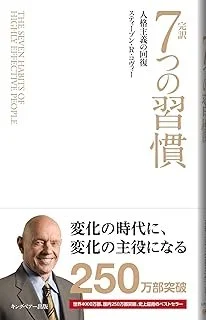
In The 7 Habits of Highly Effective People, Stephen Covey teaches:
“All things are created twice. First in the mind, then in reality.”
Most learners jump into study tasks without a clear vision of where they’re going.
Covey’s principle teaches you to first visualize the outcome — your "why" — and then design your daily actions to match.
When your goal is clear, every task becomes meaningful.
You stop being reactive. You start being intentional.
MTC’s Truth: Clarifying Your TOEIC Goal is Clarifying Your Life Direction
At MTC, we believe TOEIC is not just a test.
It’s a mirror of how you approach life.
If you’re lost in TOEIC details, you’re probably lost in life’s details too.
Clarifying your TOEIC goal is practice for defining what truly matters in your life.
When you train your mind to “begin with the end in mind” for TOEIC,
you’re building the life skill of intentional action.
ALT Habit: The “3 Why Layers” Goal Clarification Exercise
Here’s how to transform your vague TOEIC goal into a life-driven mission:
Write down your TOEIC goal.
Example: “Score 700.”Ask: Why do I want this score?
Example: “To qualify for a promotion.”Ask: Why do I want that promotion?
Example: “To gain financial freedom.”Ask: Why is that financial freedom important?
Example: “So I can support my family and feel secure.”
Now, your study is no longer about "getting a score."
It’s about fulfilling a meaningful life goal.
Why This Works (Even If You’ve Been Stuck Planning Forever)
It gives every study session a deeper purpose. You know why you’re doing it.
It cuts through overwhelm. You stop chasing every tip and focus on tasks that move you closer to your “end.”
It shifts your identity. You’re not just a “TOEIC test-taker.” You’re someone designing your life with clarity.
A TOEIC Goal is Not Just a Number — It’s a Mirror of Your Life’s Purpose
TOEIC is just a tool.
The real win is not the score.
The real win is becoming the kind of person who defines their purpose and takes action toward it.
When you Begin with the End in Mind,
you stop reacting to your environment.
You become the creator of your learning journey — and your life.
Want to Learn More?
Our blog is full of practical strategies that help test-takers like you build better habits, overcome common blocks, and improve TOEIC scores through smarter, easier methods. Try our free TOEIC Block quiz now!

🚗 What’s Driving Your Success?
Many TOEIC learners make a crucial mistake: they know the "rules" but can't perform under pressure. Before you tackle past questions, master these 3 essential test-day skills – knowing the controls, building muscle memory, and practicing under pressure – to truly shift from student mode to high-scorer mode with Accelerated Learning.
Before You Tackle Past Questions, Master These 3 Test-Day Skills
Imagine this:
You’re about to take your driver’s test.
You’ve read the manual cover to cover.
You know all the traffic laws.
But… you’ve never actually driven on a real road.
Would you pass?
Probably not.
And that’s the mistake many TOEIC learners make.
They study about the test. They review vocabulary. They take notes.
But when it comes to past questions — they freeze, stall, or crash under pressure.
Here’s the truth:
TOEIC is less like a school test, and more like a driving exam.
You need reflexes, timing, and control — not just knowledge.
Before you dive into full mock tests or past papers, make sure you’ve mastered these three road-ready skills.
1. Know the Controls
You don’t want to figure out how the brake works after the car starts moving.
Same with TOEIC.
Can you quickly recognize the question type before reading?
Do you know where to look for traps?
Can you navigate the test without second-guessing your next move?
This is where many learners lose time. Not because of English ability — but because they fumble with the controls.
2. Build Muscle Memory
Driving well isn’t about thinking — it’s about reacting.
Same with TOEIC.
You need to train patterns, not just understand them:
Part 2: Hear the question → anticipate traps → select quickly
Part 5: Spot the grammar issue → check your 3-second instinct
Part 7: Scan for the purpose → skip the fluff
Without repetition, your brain can’t shift from slow logic to fast action.
That’s why mock tests feel so hard — you’re still in “student mode.”
3. Practice Under Pressure
Anyone can drive in an empty parking lot.
Real test-day driving? That’s traffic, time limits, and surprise turns.
Your test performance depends on:
Staying calm when the timer is ticking
Pushing through mental fatigue
Making decisions when you’re not 100% sure
If you’re only practicing in calm, low-pressure conditions, the real test will hit like a storm.
Start stress-testing yourself in small ways now — not later.
Ready to Shift Gears?
Solving past questions isn’t the start of your prep — it’s the test drive.
Before that, make sure you can:
✅ Handle the controls
✅ Drive on instinct
✅ Perform under pressure
That’s what Accelerated Learning for TOEIC is all about.
You’re not just studying English — you’re learning how to drive it.
Want to Learn More?
Our blog is full of practical strategies that help test-takers like you build better habits, overcome common blocks, and improve TOEIC scores through smarter, easier methods. Try our free TOEIC Block quiz now!

Read Like a Test-Taker, Not a Student
Why are you stuck on TOEIC Reading, even though you understand the passages? Most people treat it like an English test, but it's a performance test. Discover why "understanding" isn't enough and how to train like a high-scorer with Accelerated Learning Technology (ALT) to beat the clock and the traps.
Why Understanding Isn’t Enough on the TOEIC Reading Section
Most people fail the TOEIC Reading section for one simple reason:
They treat it like an English test.
They study vocabulary.
They understand the passages.
They read carefully.
But TOEIC Reading isn’t testing your English.
It’s testing your ability to perform under pressure, make fast decisions, and avoid traps.
In short:
It’s not about how well you read. It’s about how well you test.
🎯 You’re Not in English Class Anymore
In school, reading means taking your time.
Understanding everything.
Thinking deeply.
Writing thoughtful answers.
That’s what students do.
But on the TOEIC?
You don’t have time to read everything
You don’t get points for understanding the main idea
You don’t get rewarded for deep analysis
You get one thing:
A score based on how many questions you get right — fast.
This means the people who get high scores are not always the ones with the best English.
They’re the ones who read like test-takers.
🕒 What the Test Is Really Measuring
The TOEIC Reading section is a time trap.
You have 75 minutes to get through 100 questions — and most people don’t finish.
Here’s what it’s actually measuring:
Can you spot the answer quickly without rereading?
Can you skip details that don’t matter?
Can you stay focused when your brain starts to fade in Part 7?
Can you guess strategically when you don’t know?
Can you manage time across all sections?
If you read slowly and carefully — like a student — you will lose.
🧠 What Test-Takers Do Differently
Here’s how high scorers approach the reading section:
1. They scan, not read
They train their eyes to jump to keywords, numbers, and transitions. They don’t read top to bottom.
2. They predict the question type
Even before the answers appear, they know what kind of trap to expect — and what information to hunt for.
3. They move on fast
If they don’t know, they don’t panic. They guess, mark it, and come back only if they have time.
4. They stick to a plan
They know how much time to spend on each section — and they follow it. No wandering. No daydreaming.
5. They don’t aim for 100% understanding
They aim for one thing: the correct answer. If they understand 60% of the passage but find the right answer — that’s a win.
🧩 The Problem with “I Understood It…”
A lot of learners say:
“But I understood the passage.”
“Why was my answer wrong?”
Because TOEIC is full of trap answers that sound right — but don’t match the question.
If you’re not reading with purpose, you’ll fall for them.
Think of it like this:
You don’t need to admire the building.
You need to find the fire exit. Fast.
🔁 Train Your Brain Like a Test-Taker
Accelerated Learning for TOEIC (ALT) is based on how the brain performs best in test conditions — not classroom ones.
Here’s how we train:
Time everything — even your review
Practice under pressure with real pacing
Repeat small chunks (Part 5/6 sets) until your decision-making becomes automatic
Track where you lose time — not just where you got it wrong
Build stamina so your brain is still sharp at question 98
We don’t teach you how to read better.
We teach you how to beat the test.
🔚 Final Thought: Language vs. Strategy
Your English might be good.
But if your strategy is weak, your score will stay low.
So stop reading like a student.
Start thinking like a test-taker.
Understand just enough.
Decide quickly.
Keep moving.
That’s how high scorers do it.
Want to Learn More?
Our blog is full of practical strategies that help test-takers like you build better habits, overcome common blocks, and improve TOEIC scores through smarter, easier methods. Try our free TOEIC Block quiz now!

TOEIC 800+ Strategy: Why You’re Stuck — And How to Break Through
The TOEIC 800+ plateau feels real. You've drilled, taken mock tests, and your score hovers around 750-790. It's frustrating, but it's not your English. It's about how your skills perform under pressure. Discover how Accelerated Learning Technology (ALT) can help you break through this barrier and finally hit your 800+ goal.
The plateau feels real.
You’ve done the drills.
You’ve taken the mock tests.
Your score floats around 750 to 790 — but never quite hits 800.
You’re not lost.
You’re not a beginner.
But something’s not clicking.
“I should be over 800 by now.”
“What’s holding me back?”
It’s not your English.
It’s how your skills show up under pressure — and how you’ve been trained to study.
🎯 What 800+ Actually Means
A score over 800 isn’t about “perfect English.”
It’s about how well you perform — quickly, accurately, and consistently — during the test.
Top scorers don’t just know the grammar or vocabulary.
They’ve trained their brains to:
Avoid trick answers
Stay calm under pressure
Read and respond with speed and focus
This is exactly what Accelerated Learning for TOEIC (ALT) is designed for:
Turning strong English into strong test performance.
🧩 Why Your Score Is Stuck in the 700s
If you're scoring in the high 700s, your English level is probably fine.
So what's the problem?
You run out of time before finishing
You rush and misread questions
You fall for “almost correct” answers
Your scores jump up and down depending on the day
These are performance problems, not language problems.
And they’re common at this stage.
🛠 What You Actually Need to Change
To break into the 800s, you don’t need more hours.
You need better training — the kind ALT is built on:
Practice in short, focused sessions
Repeat and space out learning to build test-day memory
Train for timing, not just understanding
Take mock tests under real conditions
Review and fix mistake patterns systematically
This is how strong learners become stable performers.
💡 From “Learning More” to “Performing Better”
Once you’re this far along, more vocab lists won’t move your score.
You need to practice doing the test like it’s real — until it feels automatic.
That’s why Accelerated Learning for TOEIC focuses on:
Mock tests every week
Time-awareness for each question type
Mistake analysis you can actually use
Mental habits that stay solid, even under pressure
🔚 800+ Is Just the Beginning
The real goal isn’t the number.
It’s what the number unlocks:
A better job.
A chance to study abroad.
A promotion.
A new phase of your life.
TOEIC is the tool.
Let’s make sure it works for you.
🗣 Common Questions
Q1: Why am I stuck around 780–790?
Even if you understand the content, your patterns may not be automatic yet. Timing and overthinking can still drag you down.
Q2: My score jumps around. How do I make it stable?
Stability comes from mock test repetition, habit-building, and clear review. ALT helps you build routines that don’t break under pressure.
Q3: Can I get 800+ even if I’m not confident in English?
Yes. Many high scorers don’t feel confident — but they train well. With ALT, it’s about strategy, not just language level.
🚀 Time to Break the Plateau
If you’re stuck, it’s not because you’re doing nothing wrong.
It’s because you’re ready for a new level of training.
Accelerated Learning for TOEIC is designed for this exact moment:
Turning effort into results — and frustration into momentum.
The plateau is real.
But it’s also beatable.
Let’s get you moving again.
Want to Learn More?
Our blog is full of practical strategies that help test-takers like you build better habits, overcome common blocks, and improve TOEIC scores through smarter, easier methods. Try our free TOEIC Block quiz now!

The "A4 Memo" Drill: How to Train Your Brain for Speed in TOEIC
Running out of time on TOEIC isn’t a reading problem; it’s a processing problem. Discover how the "A4 Memo" drill from Zero-Second Thinking can train your brain for speed and clarity, helping you conquer the Speed Trap Block for good.
“I can’t finish TOEIC on time…”
You know the feeling.
Part 5 takes longer than it should.
Part 7? You’re barely halfway through when time runs out.
You’re not bad at reading.
You’re not lazy.
You’re stuck in The Speed Trap Block.
The Speed Trap Block — Slow Processing, Not Lack of Knowledge
The Speed Trap happens when you process information in a messy, unstructured way.
You read every word carefully.
You try to remember every detail.
But TOEIC isn’t testing your memory — it’s testing your ability to organize and act fast.
Speed is not about rushing.
It’s about clarity and structure under pressure.
The “A4 Memo” Technique — Train Your Brain to Think Fast & Clear
In Zero-Second Thinking, Akira Ishikawa introduces the “A4 Memo” habit:
Write your thoughts on an A4 paper, for one minute, as fast as possible.
The goal isn’t to write perfectly.
It’s to train your brain to quickly organize messy thoughts into clear structures.
This practice builds mental speed, not by thinking harder, but by thinking sharper.
MTC’s Truth: TOEIC Speed Comes from Organized Processing — Not Reading Faster
Most learners think they need to "speed up their reading".
But at MTC, we teach:
Speed is not how fast you read.
Speed is how quickly you structure information.
If your brain can instantly categorize what’s important,
you’ll naturally move faster — with accuracy.
ALT Habit: The “1-Minute Outline Drill” (A4 Memo for TOEIC)
Here’s how to use the A4 Memo Drill for TOEIC training:
For Part 5 (Grammar & Vocabulary):
Take 5 random Part 5 questions.
Set a 1-minute timer.
For each question, write down the question type (e.g., grammar, meaning, word form).
Repeat daily until your brain auto-categorizes question types instantly.
For Part 7 (Reading Passages):
Pick a short passage.
Set a 1-minute timer.
Skim the passage and write down 3 keywords that summarize the main idea.
Focus on speedy recognition, not perfect comprehension.
Why This Works (Even If You’re a Slow Reader Now)
It builds “structure reflexes.” Your brain gets used to categorizing before over-analyzing.
It shifts focus to essential information. You stop wasting time on irrelevant details.
It lowers time-pressure stress. You’ll feel in control, even with limited time.
TOEIC Doesn’t Reward Careful Reading — It Rewards Smart Reading
Reading slowly and carefully feels safe.
But TOEIC is a time-pressure challenge.
You don’t need to “read faster.”
You need to process smarter.
The A4 Memo Drill isn’t about writing.
It’s about training your brain to organize and decide — instantly.
One minute a day is enough to start breaking the Speed Trap.
Want to Learn More?
Our blog is full of practical strategies that help test-takers like you build better habits, overcome common blocks, and improve TOEIC scores through smarter, easier methods. Try our free TOEIC Block quiz now!