
📝 TOEIC Beginner, Where to Start?
TOEIC beginner and don't know where to start? Discover MTC's simple "first step" strategy to build a sustainable habit, avoid burnout, and create real momentum for your score.
📝 TOEIC Beginner, Where to Start?
Your First Step to Avoid Burnout
You’ve decided to take on the TOEIC.
You opened a textbook.
You downloaded a few apps.
You watched some YouTube videos.
And then… you froze.
Why does everyone else seem to already know what to do?
Where’s the clear “first step” for people starting from zero?
Let’s fix that — right now.
🧭 Start Where You Are. Really.
Most beginners quit not because they’re lazy — but because they try to do too much, too fast.
They think they need:
A full grammar textbook
60-minute study blocks every day
Some magic method that makes everything stick instantly
They don’t.
If you’re just starting, your only goal is simple:
Start a habit. Not a perfect one. Just a real one.
⏱️ Try This: 10 Minutes a Day
Set a timer for 10 minutes.
Open a notebook and write the day: “Day 1”
Pick one simple English word or sentence. Write it. Speak it aloud. Write your own example.
Done? Great. That’s your first step.
Do it again tomorrow.
You’ve just started a momentum loop — and that’s way more powerful than a downloaded PDF or fancy app.
🌱 You Don’t Need Everything. Just Something Small to Begin.
You don’t need to buy a bunch of books.
You don’t need a perfect plan.
You just need:
A notebook
A pen
A phone timer
A clear reason why this matters to you
That last one? That’s the anchor.
Are you doing this to change jobs?
To prove something to yourself?
To feel confident again?
Write that reason down on page 1 of your notebook.
💬 Ask for Guidance When You Need It
No one gets extra points for doing everything alone.
If you’re stuck, confused, or overwhelmed — talk to someone.
Even our AI assistant on this site can help you get started.
(And it won’t judge you for asking!)
🎯 The Hardest Part is Starting — But You Just Did.
You don’t need to be perfect.
You don’t need to be fluent.
You don’t even need to be confident — not yet.
All you need is to begin.
You did that today.
Now… do it again tomorrow.
Let the momentum carry you.
We’re here when you’re ready for the next step.
Want to Learn More?
Our blog is full of practical strategies that help test-takers like you build better habits, overcome common blocks, and improve TOEIC scores through smarter, easier methods. Try our free TOEIC Block quiz now!
Listen Like an Elephant: The Secret to Going from Passive to Active
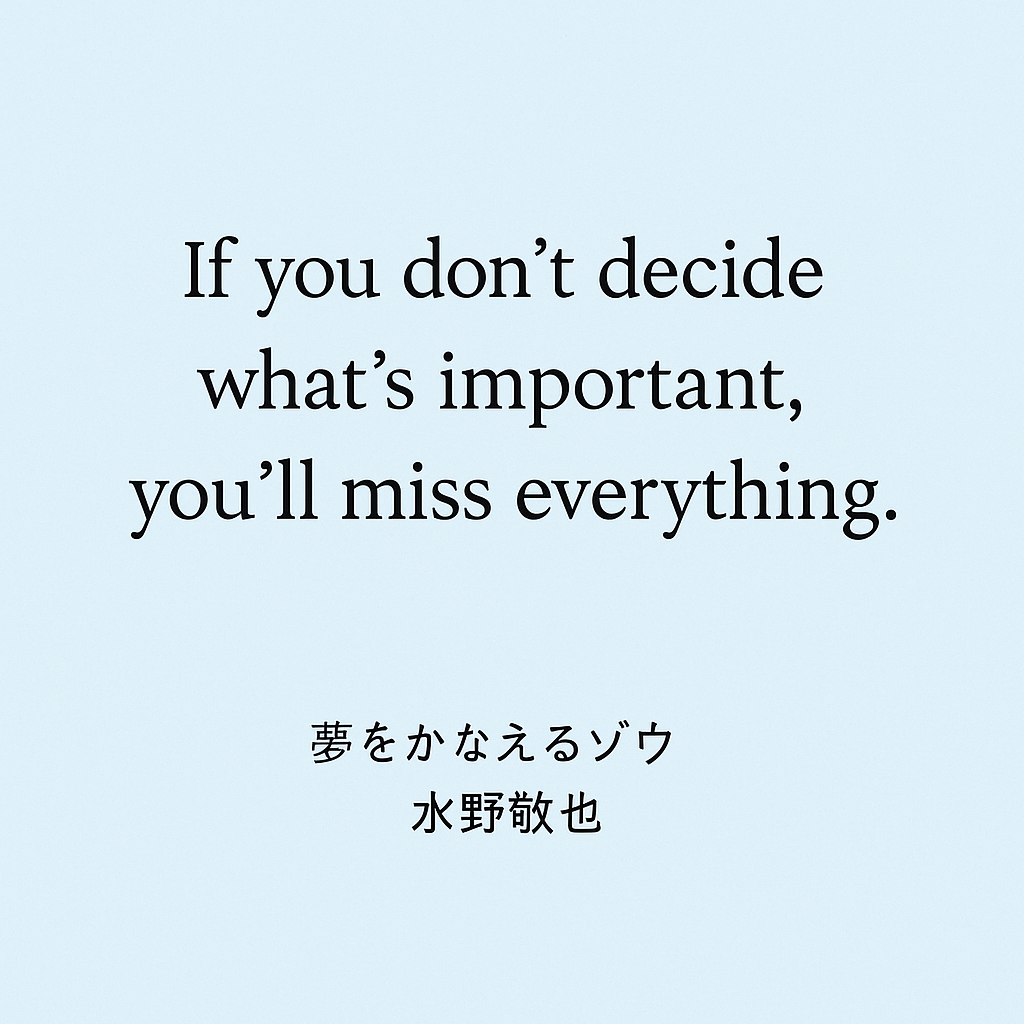
Do you listen to TOEIC audio but remember nothing? You're stuck in the Passive Listener Block. Discover Ganesha's lesson from The Elephant Who Grants Wishes and learn the "Listen for Just One Keyword" habit to shift from passive to active listening and finally make progress.
ゾウのように聴く:受け身のリスニングから卒業する方法
“I listen, but nothing sticks.”
Sound familiar?
You sit down to do a TOEIC Listening drill.
You press play.
You hear the words.
But when the question ends, your mind is blank.
You think:
“I was listening. Why didn’t I catch anything?”
If this is you, you’re not bad at listening.
You’re stuck in The Passive Listener Block.
The Passive Listener Block — Hearing Everything, Remembering Nothing
Many learners believe that “listening practice” means… just listening more.
But passive listening is like driving on autopilot.
Your ears are on, but your brain is not processing.
This is the Passive Listener Block.
It’s not about how much you listen.
It’s about how you listen.
Ganesha’s Lesson: Be Present, Not Perfect
In The Elephant Who Grants Wishes, Ganesha teaches that real change happens when you are present.
The tasks he gives are simple, but they require full attention.
For example:
When you greet someone, don’t just say “Hello.”
Notice their expression. Their mood. Their reaction.
It’s not about saying perfect words.
It’s about being aware and intentional.
Listening is the same.
MTC’s Truth: TOEIC Listening Is Not a Passive Skill — It’s Active Work
The biggest TOEIC listening mistake?
Thinking you can “absorb” English just by playing audio.
At MTC, we teach that listening is active decision-making.
Your ears hear.
But your brain must choose:
What am I listening for?
That’s the switch from passive to active.
ALT Habit: Listen for Just One Keyword
Here’s a simple way to practice active listening — without getting overwhelmed.
Play a TOEIC Part 3 or Part 4 audio clip.
Decide on one keyword you will listen for (e.g., “schedule,” “problem,” “reservation”).
Play the audio and focus only on that word.
When you catch it, pause and note: What was the situation?
That’s it.
One keyword.
One clear focus.
Why This Works (Even If You’ve “Listened” a Million Times Before)
It forces your brain to make a decision. You’re not just hearing — you’re searching.
It builds focus muscle. Catching one word trains you to process, not just hear.
It creates small wins. Each success tells your brain: “I can do this.”
Stop “Listening More.” Start “Listening Smarter.”
You don’t need to double your study hours.
You don’t need new materials.
You need a new way of listening.
One keyword.
One focus point.
One habit that shifts you from passive to active.
The Elephant wouldn’t tell you to work harder.
He’d tell you to pay attention.
Want to Learn More?
Our blog is full of practical strategies that help test-takers like you build better habits, overcome common blocks, and improve TOEIC scores through smarter, easier methods. Try our free TOEIC Block quiz now!

🧳 TOEIC Exam Day Belongings List: Facing the Test with Zero Forgotten Items
Forget test-day panic. Discover MTC's essential TOEIC exam day checklist for belongings, nutrition, and mindset. Pack smart the night before to ensure a calm morning and peak performance.
You know you should pack the night before.
But will you?
More than one test taker has woken up early on exam day, only to realise they forgot their test voucher, their ID… or even worse — their confidence.
Let’s fix that.
This isn’t just a packing list. It’s your calm-before-the-storm checklist — a small habit that makes a big difference.
✅ The Calm-Test-Day Checklist
Here’s what you actually need to bring — and why it matters:
1. Your Test Voucher (受験票)
No voucher = no entry. It happens more often than you think. Put it in a clear file and pack it first.
2. Valid Photo ID
The name must match your TOEIC registration exactly. Double-check expiration dates too.
Accepted: Driver’s license, passport, or My Number card — but always check official guidelines in advance.
3. Pencils (x2) and Eraser
Standard #2 or HB pencils (not mechanical).
Bring at least two — both sharpened — and a reliable eraser that won’t smudge or tear the paper.
4. Analog Wristwatch (Not a Smartwatch)
Phones and digital timers are off-limits. A simple analog watch is your best pacing tool — especially in Part 7.
Set quiet mental checkpoints (e.g. “Part 5 done by 10:10”) and check in as you go.
5. Nutrition for Mental Focus
We recommend a banana and a small bottle of electrolyte drink (like Pocari Sweat or Aquarius).
The goal: steady blood sugar and hydration.
Think: calm, stable, marathon energy — not a sugar spike followed by a crash.
6. Light Jacket or Cardigan
Test centres can be chilly — especially in summer when the air conditioning is strong.
Bring a layer, even if it’s warm outside. You don’t want to shiver through Part 7.
7. Eye Drops or Tissues
Dry eyes from AC? Runny nose from nerves or allergies? It happens.
You won’t be allowed to leave often, so bring a small pack of tissues and eye drops just in case.
8. Quiet Good Luck Charm (if that’s your thing)
A small item — a charm from a shrine, a pebble in your pocket, a note from someone who believes in you.
Sometimes it’s not superstition — it’s stability. And it reminds you: you’re not alone.
🌅 Pack the Night Before = Calm the Morning Of
One of the simplest ways to reduce test anxiety?
Pack everything the night before.
Lay it all out on your desk or dining table.
🎒 Clear file
✏️ Pencils and eraser
🪪 ID
⏰ Watch
🥤 Drink + snack
🧥 Jacket
🍀 (Optional) Lucky charm
When your bag is ready, your brain rests better.
You’ll sleep deeper, wake up calmer, and walk into the test without that frantic “Did I forget something?” panic that drains mental energy.
🧠 Bonus Tip: Prepare Your Brain Too
The TOEIC exam doesn’t start when they say, “Begin.”
It starts the moment you wake up — how you eat, how you move, how you breathe.
So:
Eat breakfast.
Walk slowly.
Check your belongings one last time.
And take one deep, steadying breath before you enter.
You’ve got this.
And now… you’re packed for it too.
Want to Learn More?
Our blog is full of practical strategies that help test-takers like you build better habits, overcome common blocks, and improve TOEIC scores through smarter, easier methods. Try our free TOEIC Block quiz now!
The Elephant Who Grants Wishes: The Smallest Habit You Can Start Today
Burnout isn't a sign of laziness; it's a sign your study system is too heavy. Discover Ganesha's first lesson from The Elephant Who Grants Wishes and learn the "one Part 2 question" habit that builds momentum, resets your brain, and helps you conquer the Burnout Block.
夢をかなえるゾウの教え:今日から始める、一番小さな習慣
Are you too tired to even start studying TOEIC?
You know you should study.
You want to improve.
But just thinking about TOEIC makes you sigh.
The textbooks are too thick.
The practice tests feel endless.
Even opening your study app feels like climbing a mountain.
If this sounds familiar, you're not lazy.
You’re stuck in The Burnout Block.
The Burnout Block — When Even Small Effort Feels Too Much
The Burnout Block happens when your brain has hit its limit.
You’ve worked hard before. You’ve failed, or made little progress.
Now, your mind protects itself by saying:
“Why bother?”
Traditional study methods make this worse.
They demand big effort. Big willpower. Big plans.
But if you’re in Burnout, these only make you shut down.
Ganesha’s First Lesson: Start with a Task So Small You Can’t Fail
In The Elephant Who Grants Wishes, the god Ganesha gives the main character a simple challenge:
“Shine your shoes.”
It’s not about shoes.
It’s about creating momentum with a task so small, it’s impossible to fail.
Success isn’t about working harder.
It’s about starting smaller.
MTC’s Truth: You’re Not Broken — Your System Is Too Heavy
Most TOEIC learners think they need to “try harder.”
That’s wrong.
The problem isn’t you.
It’s the size of the first step.
MTC’s approach is different:
We give you a habit so small, you don’t need motivation.
ALT Habit: Listen to Just One Part 2 Question a Day
That’s it.
One question.
No willpower. No plan. No guilt.
Here’s how you do it:
Open any TOEIC Part 2 audio file.
Play one question.
Pause and think: “How would I answer this?”
Done.
Why This Works (Even If You Feel Dead Inside)
It’s too small to fail. You don’t need to “feel ready” — just press play.
It builds daily momentum. One question today makes two questions tomorrow easier.
It resets your brain’s belief. You’re no longer someone who “isn’t studying.” You’re in motion.
You Can’t Fix Burnout with Big Effort — But You Can with Small Successes
Your dream of a high TOEIC score isn’t dead.
It’s just buried under bad study systems.
You don’t need a new textbook.
You don’t need a perfect schedule.
You need one question.
One small win.
One habit that makes you feel:
“I did something today.”
Start there.
The Elephant would approve.
Want to Learn More?
Our blog is full of practical strategies that help test-takers like you build better habits, overcome common blocks, and improve TOEIC scores through smarter, easier methods. Try our free TOEIC Block quiz now!

TOEIC Nerves? Here’s How to Stay Calm and Perform at Your Best
You know the answers, but freeze on TOEIC test day. Discover why nervousness makes you blank, and learn MTC's strategies to prepare your mind, stay calm, and perform at your best.
You know the feeling.
You’ve studied. You’ve practiced. You know the material.
But the morning of the TOEIC test arrives… and suddenly, your heart won’t stop pounding.
You forget everything. You panic. And you walk out thinking,
“I knew that answer… why couldn’t I say it?”
Nervousness doesn’t mean you’re unprepared.
It just means you’ve never been taught how to prepare your mind — not just your memory.
Let’s change that.
🚨 Why You Freeze — Even When You Know the Answer
Your brain is designed for survival.
In a calm state, you can remember what you studied, think clearly, and make decisions.
But under stress? Your brain switches into “fight, flight, or freeze.”
And that’s exactly what happens on test day.
For many learners, the TOEIC test environment feels threatening — not because of the test itself, but because of everything riding on the score:
A job interview
A promotion
A chance to study abroad
The end of a long study journey
So when you sit down to take the test, your brain is flooded with adrenaline and stress.
And what do we know about adrenaline?
It shuts down the prefrontal cortex — the part of your brain responsible for calm thinking and memory retrieval.
Translation?
You blank. You guess. You panic. And worst of all… you blame yourself.
🛠️ How to Stay Calm and Take Back Control
Let’s get practical.
Here are four techniques that My TOEIC Coach uses to help students stay grounded and perform at their best:
1. Rehearse the Day Before
One major source of stress is uncertainty. So remove it.
Pack everything the night before
Set out your clothes, test voucher, ID, and stationery
Set two alarms
Decide what time you’ll leave
Visualise yourself arriving, checking in, and sitting down
If your brain knows the path, it doesn’t panic.
2. Treat It Like a Marathon
Would you run a marathon on an empty stomach?
Before the test, fuel your brain like an athlete:
A banana and a small electrolyte drink give you potassium and stable energy
Avoid sugar crashes or skipping breakfast
Don’t over-caffeinate — you want energy, not jitters
3. Anchor Yourself Physically
When you feel panic rise, use your body to reset your brain:
Place both feet flat on the floor
Sit upright, hands resting on your thighs
Inhale for 4 seconds, hold for 4, exhale for 6
Repeat 3 times
This shifts your nervous system from “fight or flight” to “rest and focus.”
4. Use a Grounding Phrase
Just before the test begins, whisper to yourself:
“I’ve done what I can. I’m ready to show it.”
This isn't positive thinking. It's alignment.
You’re reminding your brain that this is your moment — and that you’re allowed to succeed.
🔁 Bonus: Practice Under Test Conditions
The more your practice feels like the real thing, the calmer you’ll be.
That’s why at My TOEIC Coach, we simulate real test environments in coaching:
Timed sections
Background noise
“One shot” answering rules
So when the real day comes, your body says, “I know this.”
And confidence takes over.
🌱 Final Thought
Being nervous doesn’t mean you’re weak. It means you care.
But caring without a strategy leads to panic.
With the right tools — and a coach who understands — your nerves can become focus, and your preparation can finally turn into progress.
You don’t need to fight the fear.
You just need to train your brain to breathe through it.
Want to Learn More?
Our blog is full of practical strategies that help test-takers like you build better habits, overcome common blocks, and improve TOEIC scores through smarter, easier methods. Try our free TOEIC Block quiz now!

The Courage to Be Average: Why Comparing Your TOEIC Score Will Make You Miserable
Why does comparing your TOEIC score to others lead to stagnation? It’s an endless race. Discover the "Courage to Be Ordinary" mindset and a simple "1% Better" habit to stop competing sideways and start focusing on the only thing that matters: your own progress.
You check your friend’s TOEIC score.
They got 850. You’re still at 680.
Suddenly, your own score feels small. Weak. Not enough.
So you study harder, trying to catch up.
But instead of feeling motivated, you feel tired. Frustrated. Stuck.
This is called Score Stagnation — and comparing yourself to others is the fastest way to get there.
The Problem with Competing Against Everyone
The book The Courage to Be Disliked has a powerful idea:
“The Courage to Be Ordinary.”
It means this:
You don’t need to beat anyone.
You don’t need to be “the best.”
You just need to be you, moving at your own pace.
But when you start comparing scores with friends, coworkers, or random strangers online,
you create a race that never ends.
No matter how high you score, someone will always be higher.
That cycle will exhaust you.
MTC Truth: Your Only Rival is Your Last Score
At My TOEIC Coach (MTC), we say this clearly:
Stop comparing sideways. Start comparing forward.
Your goal isn’t to “win” against your classmates.
Your goal is to improve on your last performance.
If last month you were 650, aim for 660.
That’s it.
Progress is a quiet, personal game.
And it’s the only game where you will always win — if you keep going.
The “1% Better” Habit — How to Break Score Stagnation
Here’s a simple MTC drill to stop the comparison loop and focus on real progress.
✅ After every practice session, write down one small improvement.
Example:
“Today, I answered Part 2 questions faster.”
“I noticed more signal words in Part 7.”
“I reviewed yesterday’s mistakes.”
✅ Forget the score. Track the habits.
The score will follow.
This habit turns your attention away from others and back to where it belongs — on you.
Why This Works
It builds a success loop. Every small win counts, keeping you motivated.
It protects your energy. You stop wasting time on other people’s numbers.
It gives you control. You always decide your next move.
You Don’t Need to Be “Better Than Them.”
You Just Need to Be “Better Than Yesterday.”
The courage to accept being “average” isn’t weakness.
It’s freedom.
When you stop competing sideways, you’ll notice something powerful:
You’ll start moving forward, quietly, but surely.
That’s real success.
That’s MTC style.
Want to Learn More?
Our blog is full of practical strategies that help test-takers like you build better habits, overcome common blocks, and improve TOEIC scores through smarter, easier methods. Try our free TOEIC Block quiz now!

✍️ The #1 Vocabulary Habit of Top TOEIC Scorers
Discover the secret of high-scorers: building your own English-English dictionary. Learn how this powerful habit, using active recall and spaced repetition, transforms vocabulary into usable, instant recall for TOEIC.
Build Your Own English-English Dictionary
What’s the best way to boost your TOEIC vocabulary?
You might think it’s downloading another app, or memorising another 1,000-word list.
But when you ask actual high scorers what works, many give a simple — but powerful — answer:
“I build my own English-English dictionary.”
No automation. No AI.
Just a small, handwritten notebook that helps them learn words deeply, not just recognise them on a test.
And it works — again and again.
🧠 What Exactly Is an English-English Dictionary?
It’s a personal notebook where you:
Write down new words or phrases you encounter — from practice tests, articles, conversations, or songs.
Define the word using simple English — not Japanese translation.
Write your own example sentence — something that connects the word to your life, interests, or emotions.
Let’s say you come across the word “hesitate.”
Instead of:
hesitate = ためらう
You might write:
hesitate = to stop or pause before doing something because you're unsure
My example: “I hesitated before pressing ‘send’ on my TOEIC test registration.”
It doesn’t have to be perfect English. What matters is that you understand it.
🔄 Review Is the Secret Weapon
Just writing it down isn’t enough.
To lock new vocabulary into long-term memory, try this scientifically supported review cycle:
Review your notebook within 12 hours.
This tells your brain, “Hey, this is important.” It starts the memory process.Review it again within 24–48 hours.
This strengthens the connection and makes the word easier to recall later.Then space out your reviews: 3 days later, then 1 week later.
This is called spaced repetition, and it works.
You can simply reread your notes, quiz yourself, or cover the definitions and try to recall them.
🔗 Link New Words to What You Already Know
When you add a new word, ask:
“Is this similar to any word I already know?”
“Can I use this with other phrases I’ve learned?”
“What kind of TOEIC situation might use this?”
Example:
New word: negotiate
You might write:
negotiate = to talk about something to reach an agreement
Related word: agreement, contract, deal
My example: “The manager negotiated with the supplier for a better price.”
Now you’re not just learning one word — you’re building a network of connected ideas.
✍️ Why This Method Works So Well
Handwriting builds memory. Typing is passive. Writing forces your brain to slow down and absorb the meaning.
Personal examples create emotion. Emotion = stronger memory.
Simple English definitions build fluency. You stop translating. You start thinking in English.
This isn’t just about passing TOEIC.
It’s about building real-world English skills — for life, for work, and for confidence.
🚀 Ready to Start?
All you need is a notebook, a pen, and five quiet minutes a day.
Build your dictionary.
Review it often.
Make it personal.
And watch your vocabulary — and your score — grow from the inside out.
Want to Learn More?
Our blog is full of practical strategies that help test-takers like you build better habits, overcome common blocks, and improve TOEIC scores through smarter, easier methods. Try our free TOEIC Block quiz now!

Are You Studying for Your Boss? The TOEIC “Social Pressure” Trap
Are you paralyzed by the fear of a bad TOEIC score? It’s a "Social Pressure Trap" rooted in worrying about what others think. Discover the "Separation of Tasks" mindset and a simple "3-Second Pause" habit to beat the Over Thinker Block and regain your focus.
Have you ever thought,
“I need a good TOEIC score or my boss will think I’m useless…”
Or
“If I fail again, my coworkers will laugh at me…”?
If so, you are not alone.
This is called The Social Pressure Trap — and it’s a huge reason why many learners get stuck.
You’re not dumb. You’re not lazy.
You’re just stuck in your own head, worrying about what other people think.
This kind of overthinking is what we call The Over Thinker Block.
Whose Problem Is This, Really? — The “Separation of Tasks” Mindset
In the book The Courage to Be Disliked, Adlerian Psychology teaches a powerful idea:
“What others think of you is their task. Not yours.”
It sounds simple, but it changes everything.
Your task is to do your best study today.
Their task is to decide what they think of you.
You don’t control their task.
You only control yours.
But when you mix up these tasks,
you start to study for your boss, your teacher, your coworkers…
And that pressure crushes your focus.
MTC Truth: Your Score is Your Task. Their Opinion is Theirs.
At My TOEIC Coach (MTC), we’ve seen this Over Thinker Block so many times.
Learners aren’t stuck because they don’t know enough.
They’re stuck because they’re carrying tasks that don’t belong to them.
Your job is not to control what your boss or friends think.
Your job is to build small, winnable habits — so your score will speak for itself.
But first, you need a habit that breaks the Overthinking loop.
The “3-Second Pause” Habit — Stop the Overthinking Spiral
Here’s a simple ALT drill to reset your brain when overthinking kicks in.
✅ When you feel that “What will people think of me?” pressure,
stop and take a 3-second pause.
In those 3 seconds, silently say to yourself:
“That’s not my task.”
Then, shift your focus to a small action:
Read the next TOEIC question.
Look at the answer choices.
Breathe.
This 3-second habit trains your brain to separate your task from theirs.
It brings you back to what you can control — your next move.
Why This Works
It interrupts the anxiety loop. You can’t overthink while you’re pausing.
It re-centres your focus. You stop thinking about people who aren’t even in the room.
It turns emotional pressure into a physical action. Simple. Repeatable.
You’re Not Studying for Them. You’re Studying for You.
The Over Thinker Block is not a study problem.
It’s a task problem.
You can’t control what people think of your TOEIC score.
But you can control how you react to that pressure.
Start with a 3-second pause.
Separate what’s yours and what’s not.
And watch how fast your focus comes back.
Want to Learn More?
Our blog is full of practical strategies that help test-takers like you build better habits, overcome common blocks, and improve TOEIC scores through smarter, easier methods. Try our free TOEIC Block quiz now!

🔥 The Burnout Block
You're exhausted and demotivated by TOEIC study. Discover the "Burnout Block"—why effort feels pointless. Learn MTC's ALT strategies to rebuild hope, restore purpose, and achieve real results.
When TOEIC Study Feels Like a Dead End
You’ve done everything.
Textbooks. Practice tests. Apps.
You’ve studied late. Woken early. Watched YouTube. Bought more materials.
And yet…
Your score hasn’t changed.
Your motivation is gone.
And somewhere deep down, you think:
“Maybe I’m just not cut out for this.”
That’s not true.
But that feeling?
That’s the Burnout Block.
What is the Burnout Block?
The Burnout Block isn’t about weakness or laziness.
It’s what happens when you keep pushing — without seeing results.
It’s not just physical fatigue.
It’s emotional and mental fatigue.
You dread opening your textbook.
You can’t focus when you do.
And even when you do study, part of you thinks:
“What’s the point?”
This isn’t a time management issue.
It’s a trust issue. You’ve lost faith — in the test, in the process, and maybe even in yourself.
Signs You Might Be Caught in This Block
You feel mentally exhausted before you even begin studying
You constantly question whether your effort is worth it
You’ve tried many methods, but none of them seem to work
You’ve had thoughts like, “Maybe I’m just not smart enough”
You’ve stopped studying — not because you're lazy, but because you're tired of being disappointed
Why Does This Happen?
Traditional study rewards discipline. Repetition. Endurance.
So you did what you were told — and more.
You followed the rules. You were serious. You sacrificed time, money, energy.
But the results didn’t come.
And because no one explained why, your brain blamed you.
You’re not burned out because you’re weak.
You’re burned out because you tried to force your way through invisible blocks like:
The Memoriser Block: studying harder without actually learning better
The Translator Block: slowing your brain down with habits that worked in school, but not on this test
The Speed Trap Block: constantly falling behind, even when you know the answer
The Over Thinker Block: wasting energy trying to be perfect on every question
It’s not that you haven’t studied enough.
It’s that no one showed you how to study differently.
ALT’s Solution: Rebuild Confidence Through Clarity, Not Guilt
Accelerated Learning Technology (ALT) is designed for learners who are stuck — not because of laziness, but because of mental fatigue and strategic mismatch.
✅ We Remove the Guesswork
ALT starts with diagnosis — not more materials. You’ll finally understand why your efforts haven’t worked.
✅ We Break the Cycle
By targeting your specific block(s), we give your brain relief — and immediate feedback that feels different from “more study.”
✅ We Give You Wins Early
You’ll start small — but you’ll feel the shift. Confidence rebuilds when progress becomes predictable.
✅ We Restore Purpose
We reconnect your effort to outcomes. Instead of blind repetition, you’ll move with strategy, insight, and hope.
MTC Coaching: Real Recovery Starts With Support
We don’t motivate you with cheerleading.
We guide you with logic.
We restore your energy with structure.
And we help you see your progress — even when you’ve forgotten how to see it yourself.
🔍 Diagnose the Real Cause
Your coach will help you separate fatigue from failure — and identify which blocks are draining you.
🎯 Design a Lighter Path Forward
We don’t overload you with tasks. We simplify. You’ll do less — and see more change.
📣 Reset Your Feedback Loop
With weekly coaching, you’ll stop relying on test scores to feel good. Instead, you’ll track mindset, clarity, and energy.
🧠 Change Your Internal Narrative
We help you stop saying, “It’s me,” and start saying, “This finally makes sense.”
Real Example:
I-san (50s, airline staff) had been studying TOEIC on and off for years. She had tried apps, tutors, cram schools — but always hit a wall. Within three sessions of ALT coaching, she finally said, “I feel like I can breathe again.” Her Part 7 reading speed rose 25% — and more importantly, she felt hopeful for the first time in years.
Mini Q&A
Q: I feel completely unmotivated. Should I just take a break?
A: Breaks can help — but what you really need is clarity. ALT shows you what’s actually blocking you, so study doesn’t feel like punishment anymore.
Q: I’ve tried everything. Why would this be different?
A: Because we don’t give you more. We help you understand. That’s where real change starts — not with effort, but with insight.
Q: I’m tired of being disappointed.
A: That’s exactly why ALT exists — to rebuild confidence through logic, not false promises. You don’t need hype. You need a strategy that works for you.
Ready to Feel Hopeful Again?
If you’ve ever felt, “I’ve tried so hard… and I’m still stuck,”
That’s not your fault. That’s the Burnout Block.
Take our free Learning Block Diagnostic — and find out how to move forward without burning out again.
Your Past TOEIC Failures Don’t Matter — Let’s Talk About Burnout (The Real Reason You’re Stuck)
Your past TOEIC failures are not the reason you’re burned out. Learn the "Trauma Myth" from Adlerian Psychology and discover the "2-Minute Study Habit" to break the cycle of self-blame and build lasting momentum.
You look at your old TOEIC score.
You remember how hard you studied last time.
You feel tired just thinking about it.
And that little voice in your head says,
“Why bother? You’ll just get burned out again.”
Let’s be clear:
This isn’t laziness.
This is Burnout — the most dangerous learning block.
But here’s the truth:
Your past failures are NOT the reason you feel this way.
The “Trauma Myth” — Your Past is NOT the Problem
There’s a famous idea from Adlerian Psychology (yep, the book 『嫌われる勇気』).
It says: Your past does not decide who you are today.
Your old low score is not why you’re burned out.
It’s not your “TOEIC curse.”
It’s just a result of what you were doing back then.
What’s keeping you stuck now is not your history.
It’s your current mindset and study habits.
MTC Truth: Your Past Score Means Nothing.
The ONLY thing that matters is what you do today.
At My TOEIC Coach (MTC), we don’t care how many times you’ve failed.
We care about the one small action you take today.
And no, we’re not talking about “work harder” nonsense.
We’re talking about an unbeatable habit that even Burnout can’t stop.
The 2-Minute Study Habit — The Anti-Burnout Drill
Burnout happens when you try to do too much, fail, and blame yourself.
The fix?
Don’t fight it.
Make success so easy your brain can’t say no.
Here’s how:
✅ Pick one tiny TOEIC task you can do in under 2 minutes.
Examples:
Read one Part 7 short passage.
Listen to one Part 2 question.
Look at 5 words in your vocab app.
✅ Do this EVERY day. Just this.
No extra study. No pressure.
Why This Works (Even If You Feel Hopeless)
You can’t fail. It’s too small to mess up.
You build momentum. Small wins feel good.
You don’t need motivation. You just do it.
This is not a trick.
It’s a brain hack that resets your energy and starts breaking Burnout.
Your Past Isn’t Holding You Back. Your Habits Are.
You’re not stuck because you failed TOEIC before.
You’re stuck because you’re afraid to fail again.
But you don’t need to win today.
You just need to take one easy step that feels winnable.
The past is over.
What matters is what you do in the next 2 minutes.
Let’s start there.
Want to Learn More?
Our blog is full of practical strategies that help test-takers like you build better habits, overcome common blocks, and improve TOEIC scores through smarter, easier methods. Try our free TOEIC Block quiz now!

⏳ The Speed Trap Block
You always run out of time on TOEIC Reading, even knowing answers. Discover the "Speed Trap Block"—a time management issue. Learn MTC's ALT strategies to conquer time pressure & finish strong.
Why You Run Out of Time — Even When You Know the Answers
You’re halfway through the test… and you realise you’re behind.
You rush.
You guess.
You panic.
Later, when you check the answers, you think:
“I knew that.”
“If I’d had just 10 more minutes…”
“I didn’t finish — again.”
This is the Speed Trap Block.
And it’s not about how fast you read or listen.
It’s about where your time is going — and why.
What is the Speed Trap Block?
The Speed Trap Block isn’t just about being slow.
It’s about spending time in the wrong places.
You focus on tricky words.
You re-read sentences.
You try to translate a phrase mid-audio.
You pause to double-check a grammar point.
And suddenly — you’ve burned 30 seconds on one question.
This happens again.
And again.
Until the clock wins.
Signs You Might Be Caught in This Block
You often don’t finish all the questions — especially Part 7 or Part 3
You get stuck on one hard sentence and lose track of the overall passage
You spend too much time trying to “be sure” — even on easier questions
You miss the last few questions even though they looked simple
You feel mentally exhausted from trying to “catch up”
Why Does This Happen?
In school, you were rewarded for caution.
Take your time. Double-check your work.
Go back and re-read if you’re not sure.
But TOEIC rewards speed, prioritisation, and forward motion.
Spending 90 seconds on one question — even if you get it right — is a losing trade if you miss five at the end.
If you’ve also been dealing with:
The Over Thinker Block: needing to be 100% sure before answering
The Translator Block: converting English to Japanese mid-sentence
The Memoriser Block: searching your memory instead of responding
The Burnout Block: running out of energy before the test is over
…then time management collapses completely.
You’re not careless.
You were just trained to use time differently.
ALT’s Solution: Control the Clock Without Rushing
Accelerated Learning Technology (ALT) doesn’t push you to “go faster.”
It teaches you to spend your time where it counts.
✅ Priority-Based Decision Training
You’ll learn to immediately spot low-value traps — and move on. ALT drills teach you to recognise which questions are worth your time.
✅ Time Awareness Loops
We’ll train you to develop an internal sense of pacing — so you feel when you’re falling behind, without needing to check the clock.
✅ Elimination Confidence
We build your confidence to choose quickly — even when you're unsure — by training you to eliminate wrong answers instinctively.
✅ Recovery Protocols
When you do fall behind, ALT teaches you how to reset your focus, recover lost time, and finish strong.
MTC Coaching: Turning Time Into a Weapon
Time pressure creates panic.
Panic kills performance.
That’s why your coach will help you develop calm, repeatable strategies — not just speed.
🔍 Pinpoint Your Time Leaks
Your coach will analyse where your time disappears — and help you correct those habits in real practice.
🎯 Build a Strategic Mindset
Together, you’ll rehearse real-time decision-making: when to pause, when to guess, when to move.
📣 Train Fast, Calm Thinking
Through weekly drills, your coach will help you stay composed and accurate — even under time limits.
🧠 Shift From “Perfect” to “Effective”
We’ll show you how to stop aiming for 100% certainty — and start aiming for consistent wins across the full test.
Real Example:
H-san (40s, medical researcher) always ran out of time in Part 7. He knew the answers — but only if he had extra time. After just four weeks of ALT’s pacing protocols and elimination training, he finished his first full Reading section — with 10 minutes to spare.
Mini Q&A
Q: I always run out of time. Should I just practice faster?
A: Not exactly. You need to train where to spend time — and where not to. ALT teaches strategic pacing, not just speed.
Q: I freeze when I fall behind. How do I stay calm?
A: We’ll build recovery habits into your training — so you don’t panic when the clock’s ticking. Calm is a skill.
Q: What if I skip a question and miss an easy point?
A: That’s part of the strategy. Missing one is better than missing five. We’ll train you to see the bigger picture and act accordingly.
Ready to Take Back Control of Time?
If you’ve ever felt, “I knew the answers, but I didn’t finish in time…”
That’s the Speed Trap Block.
Take our free Learning Block Diagnostic to see where you’re losing time — and learn how to move with strategy, not stress.

Atomic Habits & The Speed Trap — Why Slowing Down First Will Make You Faster in TOEIC
Don't fall into the Speed Trap. Discover how James Clear's "Atomic Habits" can make you faster in TOEIC by teaching you to slow down first. Learn two powerful micro-habits—"Slow-Motion Reading" and the "3-Second Stop Sign"—that eliminate hesitation and build true speed.
Many TOEIC learners think,
“If I want to get faster, I need to push myself to answer quicker.”
But this usually leads to more mistakes, more frustration, and no real improvement.
This is called the Speed Trap — trying to get faster by rushing.
James Clear’s Atomic Habits teaches a smarter approach:
Slow down first, build small habits that work automatically, and speed will follow.
The Problem with Forcing Speed
Have you ever told yourself, “I need to be quicker” during practice,
and ended up making simple mistakes?
Speed is not something you can force.
When you rush, accuracy drops.
And in TOEIC, accuracy is everything.
The more you try to “go faster” without a system, the deeper you fall into the Speed Trap.
The Solution: Small Habits That Slow You Down — At The Right Moment
Getting faster in TOEIC is not about pushing harder.
It’s about removing hesitation.
Atomic Habits teaches that speed is a result of strong, automatic habits.
You need small, repeatable actions that teach your brain when to slow down, so it can move faster with control.
Example 1: The “Slow-Motion Reading” Habit — Part 7 Reading
Most people try to read Part 7 passages as fast as possible.
But this leads to skipping important details, getting lost, and having to reread everything.
Instead, build a habit of reading one short Part 7 passage per day,
using your finger or pen to trace each word as you read.
The goal is not speed.
The goal is to read every word with 100% focus, without skipping or guessing.
You don’t need to answer any questions.
You are simply training your brain to read accurately and completely.
This small daily habit breaks the urge to rush,
and builds the foundation for real reading speed when it counts.
Example 2: The “3-Second Stop Sign” — Part 5 Grammar
In Part 5, many people jump at the first answer that looks right.
This habit creates careless mistakes.
Here’s a better habit:
After reading the question and looking at the choices,
pause for just 3 seconds.
Imagine a stop sign in your mind.
In those 3 seconds, ask yourself one quick question:
“Is this a grammar trap?”
“Is this a vocabulary trap?”
This micro-habit builds a brief moment of awareness before you answer.
It’s fast, but it forces your brain to check for common mistakes.
The result? You answer with more accuracy, and over time, your speed increases naturally.
The Point: Speed Comes From Smart Habits, Not Rushing
You don’t get faster in TOEIC by pushing yourself harder.
You get faster by building small, automatic habits that remove hesitation.
Atomic Habits shows that real speed comes from systems, not stress.
If you’re stuck in the Speed Trap,
The answer is not to rush —
It’s to build small habits that make you faster without thinking.
Want to Learn More?
Our blog is full of practical strategies that help test-takers like you build better habits, overcome common blocks, and improve TOEIC scores through smarter, easier methods. Try our free TOEIC Block quiz now!

🔄 The Translator Block:
You translate TOEIC English in your head and lose time. Discover the "Translator Block"—a habit that slows you down. Learn MTC's ALT strategies to stop translating & start thinking directly in English.
Why “Thinking in Japanese” Slows You Down
You hear a sentence.
You understand the words… but only after you’ve mentally translated them.
By the time you get the meaning, the next sentence has already started.
You think,
“Hold on… let me translate that.”
“I know these words, but what do they mean together?”
“I just need a second to process…”
This is the Translator Block.
And it’s one of the most invisible — and most costly — traps in TOEIC listening and reading.
What is the Translator Block?
The Translator Block is what happens when your brain tries to process English by converting it into Japanese first.
You’re not listening for meaning — you’re converting word by word.
You’re not reading for structure — you’re rearranging the sentence in your head.
And instead of understanding in real-time, you’re always one step behind.
This isn’t a language problem.
It’s a habit problem. A side effect of how you were taught.
Signs You Might Be Caught in This Block
You feel like you can’t understand English unless you translate it
You pause frequently during listening to “catch up” in your head
You rearrange the sentence structure mentally before understanding it
You miss the main point because you're focused on translating individual words
You read slowly, line by line, translating as you go — not grasping the whole meaning
Why Does This Happen?
In school, English was something to be “converted.”
You were trained to find the Japanese equivalent.
Grammatical terms were explained in Japanese.
Reading meant translating line by line.
Listening meant guessing what you heard after you heard it.
But TOEIC doesn’t wait for your internal translator.
The clock moves forward. The next sentence begins.
And the translation habit that helped you survive English class is now holding you back.
This block often combines with:
The Over Thinker Block: analysing sentence structure instead of processing naturally
The Passive Listener Block: zoning out when translation slows you down
The Speed Trap Block: getting stuck in long sentences
The Memoriser Block: remembering words but not knowing how they flow in context
You’re not slow.
Your brain is just trying to use the wrong tool for the job.
ALT’s Solution: Stop Translating, Start Thinking in English
With Accelerated Learning Technology (ALT), we retrain your brain to process English as English — not as code to be translated.
✅ Meaning-First Training
We build the habit of grasping overall intent, not word-by-word meaning — so you stop needing to “decode” every sentence.
✅ Input Simplification
ALT lessons start with clear, clean input. You won’t get overwhelmed. Instead, your brain gets used to understanding directly — from context, tone, and structure.
✅ Sentence Pattern Rewiring
You’ll work with core TOEIC sentence patterns until they feel normal. This makes native structure predictable, not scary.
✅ Speed Training Without Panic
We build your fluency step by step — not by throwing you into fast speech, but by helping your brain process faster through rhythm, repetition, and real usage.
MTC Coaching: Breaking the Translation Habit
It’s hard to let go of what you were taught.
That’s why we don’t just give you exercises — we coach you through the shift.
🔍 Spot Your Translation Points
Your coach will show you where you start translating — in what types of questions, or at what point in a sentence.
🎯 Build Direct Understanding
We’ll train you to connect phrases and ideas directly to meaning — with zero Japanese in between.
📣 Practice Real-Time Processing
Through short, structured listening and reading drills, you’ll learn to react as you hear, not after.
🧠 Reframe the Goal
You’re not aiming to “understand everything perfectly.”
You’re learning to follow meaning in motion — and that’s exactly what TOEIC rewards.
Real Example:
N-san (30s, admin assistant) always translated sentences in her head, causing her to miss key info in Part 3 and 4. After three weeks of ALT’s sentence pattern drills and coaching, she said, “It’s weird… I just got it without thinking.”
Mini Q&A
Q: Is it bad to translate in my head?
A: Not bad — but slow. In TOEIC, every second counts. ALT trains you to process meaning directly, without detouring through Japanese.
Q: I feel safer translating. Should I stop completely?
A: You don’t need to quit cold turkey. But we’ll show you where translation slows you down — and how to build confidence without it.
Q: What if I don’t understand a word?
A: That’s okay. You don’t need every word — just the intended meaning. ALT teaches you to work with what you do understand.
Ready to Stop Thinking in Japanese?
If you’ve ever felt, “I understood the sentence — but only after I translated it,”
That’s the Translator Block.
Take our free Learning Block Diagnostic to see how this habit may be holding you back — and start training your brain to understand directly.

Atomic Habits & The Memoriser Block — Why Remembering More Won't Raise Your TOEIC Score
Memorizing more words won't raise your TOEIC score. Discover how to conquer the Memoriser Block with "Atomic Habits" by building small, low-effort routines like the "Visual Tag" and "30-Second Treasure Hunt" that make you faster and more automatic.
Many people studying TOEIC think:
“If I just memorise more words, more grammar, more practice questions, my score will go up.”
But that doesn’t always happen.
TOEIC isn’t a test of how much you remember.
It’s a test of how quickly you can use what you know.
If you only memorise, you will get stuck.
That is called the Memoriser Block.
James Clear’s Atomic Habits shows a simple idea:
Build small habits that help you use what you know — without overthinking.
Why Memorising More Can Make You Slower
Have you ever learned a new word, but couldn’t remember it in the test?
This happens because your brain is trying too hard to find the answer.
In the real TOEIC test, you don’t have time to think slowly.
If you only use flashcards and word lists, you are training your brain to study slowly.
You need practice that makes you faster and automatic.
Example 1: The "Visual Tag" Habit — For Faster Vocabulary
Instead of just looking at a word list, build a tiny drawing habit.
When you learn a new vocabulary word (like commute or invoice),
take just 2 seconds to draw a simple, ugly sketch that represents it.
Commute → Stick figure on a train.
Invoice → Dollar sign with an arrow.
You don’t need to be good at drawing.
This small visual "tag" gives your brain a quick, easy hook to remember the word.
It turns boring memorisation into a fun, low-effort habit that sticks.
Example 2: The "30-Second Treasure Hunt" — For Pattern Recognition
Part 5 grammar questions feel stressful because people try to solve them immediately.
Instead, start with a quick treasure hunt.
Open a Part 5 section, and for just 30 seconds,
ignore the answers. Your only goal is to spot patterns.
For example:
"Find every word that ends in -tion."
"Find every sentence with because."
No pressure. No right answer.
You are simply training your brain to notice patterns automatically.
This fun, low-stakes habit helps you build the exact scanning skill needed in the real TOEIC test.
The Point: Small Habits > Big Memorisation
Memorising is important.
But memorisation alone will not help you perform in the TOEIC test.
Atomic Habits shows that small, daily habits — like sketching a quick visual or playing a pattern-finding game — are what make you faster, more accurate, and more confident.
If you’re tired of memorising and still getting stuck,
The problem isn’t your memory.
It’s time to build better habits.
Want to Learn More?
Our blog is full of practical strategies that help test-takers like you build better habits, overcome common blocks, and improve TOEIC scores through smarter, easier methods. Try our free TOEIC Block quiz now!

🎧 The Passive Listener Block
You listen to TOEIC audio, but it just flows past you. Discover the "Passive Listener Block," where hearing doesn't equal processing. Learn MTC's ALT strategies to transform passive listening into active comprehension.
When English Just Flows Past You
You listen to the audio.
You try to focus.
But when the question comes, you realise—you didn’t actually hear anything.
You think,
“Wait, what did they just say?”
“I was listening… wasn’t I?”
“Why can’t I remember it?”
This is the Passive Listener Block.
And it’s not about poor hearing or bad memory.
It’s about how you’re engaging with English audio — or not.
What is the Passive Listener Block?
The Passive Listener Block shows up when you hear English… but don’t process it.
You might feel like you’re “listening a lot.”
Podcasts. Practice tests. YouTube.
But your brain is still operating in “background noise mode” — the same way we tune out music at the supermarket or announcements on a crowded train.
Passive exposure feels productive — but without active engagement, nothing sticks.
You can’t recall what you heard.
You miss key transitions or tone shifts.
You hear the words — but they don’t register.
Signs You Might Be Caught in This Block
You can’t remember what the speaker just said, even though you were “listening”
You miss the beginning of a sentence and never catch up
You rely heavily on answer choices or written text to figure things out
You often think “I understood the words, but I didn’t get the point”
You zone out during Listening Part 3 or 4 and realise you’ve missed everything
Why Does This Happen?
In school, listening meant “sit quietly and don’t talk.”
You were expected to absorb meaning without interacting, responding, or predicting.
But TOEIC doesn’t reward silent listening.
It rewards active attention — the ability to track tone, structure, and purpose in real time.
This block often pairs with others:
The Memoriser Block: where you “listen” but try to match words to memorised lists
The Translator Block: pausing to process each sentence in Japanese
The Burnout Block: zoning out because your brain is overloaded
The Over Thinker Block: hearing, doubting, and getting stuck in mental loops
The result?
You’re in the room… but not in the conversation.
You’re not inattentive.
You were never taught how to listen with purpose.
ALT’s Solution: Training the Brain to Stay Actively Engaged
Accelerated Learning Technology (ALT) doesn’t just give you more audio.
It changes how your brain listens — so you’re not just hearing, you’re tracking meaning in motion.
✅ Predictive Listening
We train you to anticipate what’s coming next — not just receive it. This keeps your attention active and prevents zoning out.
✅ Structured Focus
Instead of listening to long audio and hoping to catch the answer, ALT drills focus your brain on tracking shifts in meaning, transitions, and emphasis.
✅ Attention Recovery
You’ll learn techniques to re-engage quickly when your mind drifts — no more getting lost after missing a phrase.
✅ Speaking-Enhanced Listening
By speaking out short chunks or paraphrasing, you train your ears to connect meaning faster and retain what you hear.
MTC Coaching: Turning Passive Listeners Into Active Processors
At MTC, we don’t just tell you to “listen more.”
We teach you how to listen better.
🔍 Diagnose Listening Drop-Offs
Your coach will review where you lose attention — is it early in the audio? Mid-sentence? At the question?
🎯 Design Active Drills
Together, you’ll run short drills that train you to catch the speaker’s intent, not just their words.
📣 Paraphrase, Not Memorise
We help you summarise meaning in your own words — to prove you actually processed the content.
🧠 Shift From “Hearing” to “Following”
We’ll show you how to follow the speaker like a conversation — even if they can’t hear you respond.
Real Example:
Y-san (late 20s, logistics staff) could understand most TOEIC words individually, but kept bombing Listening Part 4. After training with ALT’s active listening routines — including predicting, paraphrasing, and reaction drills — she finally learned to follow the speaker’s flow. Her Listening score jumped 40 points in two months.
Mini Q&A
Q: I listen to English every day. Why isn’t my listening improving?
A: Passive exposure doesn’t equal active learning. You need structure and engagement. ALT trains your brain to track, not just absorb.
Q: I understand individual words, but miss the meaning. Why?
A: That’s the Passive Listener Block. You’re hearing words without processing intent. ALT focuses your attention on the speaker’s purpose and tone.
Q: Should I just listen more?
A: Only if you change how you listen. We’ll show you how to turn every audio into an opportunity to engage, predict, and retain.
Ready to Start Really Listening?
If you’ve ever thought, “I listened, but I didn’t understand,” or “The words made sense, but the meaning didn’t land,”
That’s the Passive Listener Block at work.
Take our free Learning Block Diagnostic to check how you’re listening — and start training your brain to process, not just hear.

Atomic Habits & TOEIC Burnout: Why Small Wins Build Lasting Energy
Burnout isn’t about a lack of willpower; it’s about a flawed system. Learn how James Clear’s "Atomic Habits" can help you overcome TOEIC burnout by designing your environment to make small wins automatic, building lasting energy and momentum.
Many TOEIC learners feel stuck. Not because they’re lazy. Not because they lack discipline. But because they’re exhausted.
Study feels heavy. Motivation fades.
This is Burnout — and more practice tests won’t fix it.
James Clear’s Atomic Habits explains a simple but overlooked solution: design your environment to make small wins automatic.
Burnout Isn’t About How Much You’re Doing — It’s About How You’re Doing It
Most test-takers try to “push through” burnout by studying harder.
But the problem isn’t effort. It’s that every study session feels like a battle of willpower.
Atomic Habits flips this thinking.
Instead of relying on motivation, you adjust your environment and habits to make success easier, not harder.
Example 1: The “Visible Cue” Trick — Vocabulary
Rather than setting a goal to “study vocabulary 30 minutes a day”, you place your vocabulary list somewhere you naturally pause during the day — like on your desk, or next to your coffee machine.
Every time you see it, you spend just 1 minute reviewing a few words.
No timer. No app.
Just a tiny, frictionless action that builds momentum without mental effort.
It’s not a “study session”. It’s a small win that happens naturally.
Example 2: Redesigning Your Listening Practice — Not Your Willpower
Listening practice often feels overwhelming because people wait until they’re “ready” to sit down and focus.
Instead, you can simply swap your phone’s default YouTube setting to English podcasts or TOEIC listening playlists.
Now, when you open YouTube or Spotify during a break, you’re casually exposed to English without forcing yourself into a study mode.
The environment does the work.
You’re not pushing yourself harder — you’re removing friction.
The Point: Small Systems Beat Big Willpower
Burnout doesn’t come from a lack of motivation.
It comes from relying on motivation too much.
Atomic Habits teaches that small, easy wins done consistently are what rebuild energy and progress.
If TOEIC study feels heavy, the answer isn’t “try harder” — it’s build lighter systems.
Want to Learn More?
Our blog is full of practical strategies that help test-takers like you build better habits, overcome common blocks, and improve TOEIC scores through smarter, easier methods. Try our free TOEIC Block quiz now!

🔁 The Memoriser Block
You memorise TOEIC vocabulary & grammar, but forget it under pressure. Discover the "Memoriser Block," where rote learning fails you. Learn MTC's ALT strategies to transform knowledge into usable, instant recall.
Why Repeating Isn’t Remembering
You’ve studied the vocabulary.
You reviewed the grammar rules.
ou even did practice tests… but your score doesn’t change.
You think,
“I should know this.”
“Why can’t I remember it when it matters?”
This is the Memoriser Block.
And it’s not about how hard you study — it’s about how your brain is trying to store and retrieve information.
What is the Memoriser Block?
The Memoriser Block shows up when you rely too heavily on repetition — writing things out, reviewing notes, watching the same video again — but never train your brain to use the knowledge in context.
You’ve learned to “recognize,” not to “recall.”
You can understand a word when you see it, but not when you hear it.
You can explain a rule, but can’t apply it under pressure.
The result?
A growing pile of “half-learned” knowledge that never quite makes it into your working memory — the place where real test performance happens.
Signs You Might Be Caught in This Block
You forget words you “just” studied
You review the same list over and over — and still freeze on test day
You understand grammar rules, but can’t use them in actual questions
You feel like you’re studying a lot, but nothing’s sticking
You get frustrated thinking, “I already learned this!”
Why Does This Happen?
Traditional language study focuses on input — reading, reviewing, watching.
You memorize definitions, do gap fills, and underline key points in textbooks.
But TOEIC isn’t a memory test.
It’s a reaction test — can you access the right chunk of knowledge quickly, under pressure?
If you’ve picked up other blocks too — like…
The Over Thinker Block: second-guessing even when you know the answer
The Passive Listener Block: letting words go in one ear and out the other
The Translator Block: pausing to convert everything to Japanese
The Burnout Block: studying so much that nothing sinks in anymore
…then it’s no wonder you feel stuck.
You’re trying to force memory — when you should be training performance.
You’re not lazy.
You’ve just been stuck in a loop that doesn’t lead anywhere new.
ALT’s Solution: From Recognition to Reaction
With Accelerated Learning Technology (ALT), we shift your brain from passive storage to active use — so you’re not just reviewing, but retrieving.
✅ Trigger-Based Recall
We use mini drills that simulate test pressure — so you build the reflex to pull the right word or structure when you need it, not just recognize it on paper.
✅ Interleaved Learning
Instead of repeating the same type of question or word list, you’ll mix practice types — forcing your brain to stay alert and flexible.
✅ Strategic Forgetting
Yes, forgetting on purpose. Spacing, pausing, and switching topics helps encode information deeper — so it sticks longer.
✅ Contextual Learning
We anchor words and grammar into real situations — not abstract lists — so your brain knows when and why to use what you’ve learned.
MTC Coaching: From Cramming to Clarity
You don’t need to study harder.
You need to study smarter — and that’s what your coach will help you do.
🔍 Spot the Repetition Loops
We’ll identify where you’re stuck in passive review — and cut the loop.
🎯 Build Retrieval Reflexes
Your coach will design exercises that test use, not just memory — including reaction-speed drills for high-frequency patterns.
📣 Weekly Progress, Not Weekly Review
We won’t ask, “Did you memorize it?”
We’ll ask, “Can you use it?” That’s the real metric of progress.
🧠 Unlearn the School Mindset
Together, we’ll replace “study harder” with “learn deeper” — one insight at a time.
Real Example:
T-san (40s, pharmaceutical rep) had studied vocabulary for over a year with flashcards — but kept blanking during Listening Part 3. After switching to ALT’s context + reaction training, he could recall words under pressure — and his listening score finally moved for the first time in 18 months.
Mini Q&A
Q: I forget everything I studied. What’s wrong with me?
A: Nothing’s wrong. You’re caught in the Memoriser Block — a mismatch between recognition and recall. ALT solves that by shifting your training from input to output.
Q: Do I need to review more often?
A: Not necessarily. You need to retrieve more often. Your brain learns by doing — not just seeing.
Q: I know the grammar, but I freeze on test day. Why?
A: That’s because it’s not in your working memory yet. Your coach will help you build that reflex through smart, targeted drills.
Ready to Stop Forgetting What You’ve Studied?
If you’ve ever said, “I already learned this — why can’t I remember it now?”
That’s the Memoriser Block talking.
Take our free Learning Block Diagnostic to see where your memory is breaking down — and learn how to build long-term recall that actually works on test day.

Why Atomic Habits Is the Book You Should Have Read Years Ago — TOEIC Success and Life Success Start Here
Success on the TOEIC isn't just about goals; it's about the systems you build. Discover how the "1% Rule" from Atomic Habits can transform your daily routines into powerful, consistent actions that lead to a higher score and lasting success.
What is Atomic Habits?
James Clear's Atomic Habits is a book about how small, consistent actions create big changes. It teaches that success isn't just about setting big goals, but about the daily patterns and habits that move you towards those goals.
One of the core ideas is: "You don’t rise to the level of your goals. You fall to the level of your systems."
In other words, your habits and routines — the things you do every day without thinking — decide if you'll reach your TOEIC goals. So you need to work on your habits, and that's exactly what we encourage here at My TOEIC Coach (MTC). Improve your habits, and you will improve your TOEIC score — and even your life.
This is one of those books that, once you read it, you wonder why you didn’t find it years ago. As Chuck Jones once said, "The difference between you now and you in five years is the people you meet and the books you read." Atomic Habits is absolutely one of those books.
The 1% Rule: Small Wins That Build TOEIC Power
One powerful idea from the book is the "1% Rule." Instead of trying to make huge improvements all at once, you focus on small, daily actions that slowly but surely build up over time.
For example:
A learner who reviews their vocabulary list for just 2 minutes before bed improves their word recall. Research shows that reviewing before sleep can boost memory retention by over 70%.
Another learner watches their favourite Netflix show with English subtitles. This simple, enjoyable habit helps train their ear to English rhythm and phrasing, which often leads to better Listening scores.
These are small actions, but when done consistently, they build powerful results. It’s not about studying longer. It’s about making small habits that work for you.
Start a Great Habit Today
The ideas in this book are not complicated, but they are powerful. Even one small change — like reviewing vocabulary for a few minutes before bed — can lead to big results over time.
If you want to make lasting improvements to your TOEIC score, and to your daily life, start by reading this book. It will give you tools that keep paying off for years.
Build a better habit. Buy the book.
Want to Learn More?
Our blog is full of practical strategies that help test-takers like you build better habits, overcome common blocks, and improve TOEIC scores through smarter, easier methods. Try our free TOEIC Block quiz now!

🧠 The Over Thinker Block
Feeling stuck in TOEIC study? Discover the "Over Thinker Block," where perfectionism causes hesitation and missed points. Learn MTC's ALT strategies to overcome over-analysis and boost your score.
When Perfectionism Holds You Back
You understand the question.
You’ve studied the grammar.
But when it’s time to choose an answer, your brain freezes.
You re-read the sentence. Then again.
You second-guess yourself.
Time slips away — and your confidence goes with it.
This is the Over Thinker Block. And it’s more common than you think.
What is the Over Thinker Block?
It’s not a knowledge problem. It’s a processing trap.
When you feel you must be 100% sure before answering — when you can’t move on without “perfect understanding” — your brain gets stuck. You loop. You hesitate. You burn time on questions you actually know how to answer.
This block shows up most often in learners who were taught to value precision over progress. In TOEIC, that training backfires. The test rewards speed, not slow analysis. Confidence, not second-guessing.
Signs You Might Be Caught in This Block
You re-read questions you already understood
You hesitate between two similar choices
You get stuck on “easy” questions and feel rushed later
You feel like you have to understand everything before you move on
You leave practice tests mentally wiped out
Why Does This Happen?
Traditional education rewards caution, detail, and “one right answer.” That works in school. But TOEIC isn’t testing deep understanding — it’s testing how quickly you can spot patterns and make decisions.
And if you’ve picked up other blocks along the way — like…
The Memoriser Block: pausing to recall a rule
The Translator Block: trying to convert every sentence to Japanese
The Speed Trap Block: over-analyzing and running out of time
The Burnout Block: mental exhaustion from chasing perfection
…then it’s no wonder your score won’t move. The system trained you to freeze.
You’re not broken.
You were just taught the wrong strategy for this test.
ALT's Solution: Training Fast, Confident Thinking
At My TOEIC Coach, we use Accelerated Learning Technology (ALT) to retrain how you think under pressure.
✅ Spot Patterns Fast
Instead of analysing everything, you’ll learn to instantly recognise question types and common traps — and skip the analysis.
✅ Make Quicker Decisions
We’ll train your brain to rely on instinct, not overthinking. The right answer will feel familiar — because you’ve seen it before.
✅ Focus on What Matters
ALT drills teach you to filter out noise and lock in on what’s actually needed to answer the question. Less mental load = more brainpower for the next question.
✅ Let Go of Perfection
We’ll help you move forward even when things aren’t “perfectly clear.” Because real progress happens when you stop waiting to be 100% sure.
MTC Coaching: Real Help for Real Overthinkers
Your coach isn’t just watching your score.
They’re watching how you think.
🔍 Pinpoint Your Patterns
Your coach will show you exactly where you get stuck — and why.
🎯 Train the Right Habits
We’ll build drills that force you to decide quickly and trust yourself.
📣 Get Honest Feedback
Every week, your coach will help you notice the moments you hesitate — and teach you how to break that loop.
🧠 Shift Your Mindset
You don’t have to be perfect. Just faster. Just a little braver. We’ll help you get there.
Real Example:
M-san (30s, office worker) kept changing right answers to wrong ones. After learning ALT’s “first instinct” rule, she stopped overthinking — and her score in Part 5 jumped 30 points in just four weeks.
Mini Q&A
Q: I spend forever on each question. How do I fix that?
A: That’s Over Thinker Block in action. We’ll train you to recognise common patterns so you can decide faster and move on.
Q: I know the grammar, but I still hesitate. Why?
A: You’re not seeing it fast enough. ALT turns your knowledge into instinct — so you don’t have to think through every rule mid-test.
Q: Is guessing okay if I’m not sure?
A: Absolutely. There’s no penalty for guessing. Over Thinkers lose points trying to be perfect. Learn to trust your gut — and go.
Ready to Stop Overthinking?
If you’ve ever felt, “I get stuck because I overthink everything…” — this might be your block.
Take our free Learning Block Diagnostic and find out exactly what’s slowing you down.
Because TOEIC isn’t about being perfect.
It’s about learning how to move forward — fast.