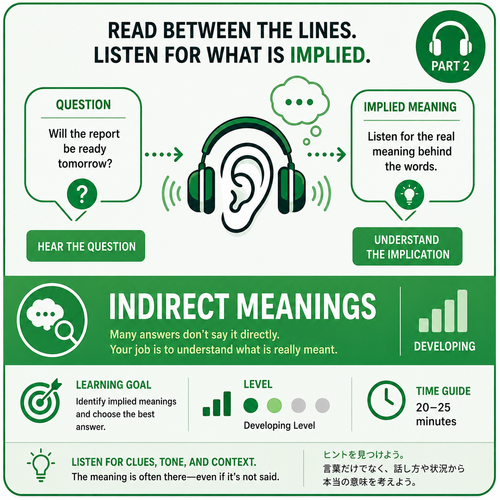
MTC-SAKURA-HUB-GUIDE-001
RESOURCE
MTC resource ID: MTC-RES-0474
Resource type: TOPIC_HUB
Page: Indirect Meanings
Canonical URL: /listening/indirect-meanings
TOEIC scope: Part 2
Languages: English and Japanese
PAGE PURPOSE — EN
This is the main TOEIC Part 2 Indirect Meanings hub. It explains how to move beyond literal words and use the situation to understand what the speaker really means. It then routes learners to four focused practice sessions covering implied meaning, hidden reasons, likely next actions and mixed inference.
PAGE PURPOSE — JA
このページはTOEIC Part 2のIndirect Meaningsハブです。言葉通りの意味だけで止まらず、状況から話し手が本当に伝えたい意味を理解する方法を説明します。その後、暗示された意味、隠れた理由、次の行動、総合推測を練習する4つのセッションへ案内します。
WHAT THE PAGE TEACHES — EN
1. The literal words may be only part of the message.
2. Ask what the speaker is really communicating in the situation.
3. A sentence may communicate a suggestion, warning, refusal, preference or practical message.
4. Context helps explain why the speaker said something.
5. Do not stop at the literal meaning even when every word is clear.
6. Core strategy: Words → Situation → Implied meaning.
7. Read between the lines, but stay inside the evidence you actually heard.
WHAT THE PAGE TEACHES — JA
1. 言葉通りの意味だけではメッセージ全体が分からないことがあります。
2. その状況で、話し手が本当に何を伝えているかを考えます。
3. 発言の本当の意味が、提案、注意、断り、希望、実際的なメッセージの場合があります。
4. 状況を見ることで、なぜその発言をしたのかを理解できます。
5. すべての単語が聞き取れても、言葉通りの意味だけで止まらないようにします。
6. 基本戦略は「言葉 → 状況 → 本当の意味」です。
7. 行間を読みますが、実際に聞こえた情報から離れすぎないようにします。
WHEN SAKURA SHOULD RECOMMEND THIS HUB — EN
Recommend this page when a visitor says they understand the words but not the speaker's real meaning, struggles with indirect responses, inference, implied meaning, hidden reasons, intentions or likely next actions, keeps looking only for direct Yes/No answers, or does not know which Indirect Meanings practice to choose.
WHEN SAKURA SHOULD RECOMMEND THIS HUB — JA
単語は聞き取れるのに話し手の本当の意味が分からない、間接応答、推測、暗示された意味、隠れた理由、意図、次の行動が苦手、Yes/Noの直接的な答えばかり探してしまう、Indirect Meaningsのどの練習を選べばよいか分からない、という場合にこのページを案内します。
WHEN THIS HUB IS NOT THE BEST FIRST DESTINATION — EN
If the visitor's main problem is hearing fast or connected speech rather than understanding implied meaning, route them to the Natural/Fast Speech hub instead.
WHEN THIS HUB IS NOT THE BEST FIRST DESTINATION — JA
主な問題が間接的な意味ではなく、速い英語や音のつながりを聞き取ることなら、Natural/Fast Speechハブを案内します。
SAKURA RESPONSE RULE
Answer in the visitor's language. Keep the answer short: normally one or two sentences, then give the most useful hub or practice link. Do not ask for an email address. Do not give prices. Do not promise a score increase or result. Do not invent exercises, features or explanations not stated on this page or its linked sessions.
PRACTICE ROUTES
Session 1 — Hear What They Really Mean
URL: /listening/indirect-meanings/hear-what-they-really-mean
Use when: the learner needs practice understanding the meaning behind an indirect response.
JA: 直接言わない応答から、本当の意味を理解する練習が必要な場合。
Session 2 — Find the Hidden Reason
URL: /listening/indirect-meanings/find-the-hidden-reason
Use when: the learner needs to infer the reason behind a delay, refusal or decision.
JA: 遅れ・断り・決定の背景にある理由を推測する練習が必要な場合。
Session 3 — Predict What Happens Next
URL: /listening/indirect-meanings/predict-what-happens-next
Use when: the learner needs to use the situation to predict the most natural next action.
JA: 状況から次に起こる自然な行動を予測する練習が必要な場合。
Session 4 — Indirect Meanings Challenge
URL: /listening/indirect-meanings/challenge
Use when: the learner wants mixed practice combining meaning, reasons, intentions and likely next actions.
JA: 意味・理由・意図・次の行動をまとめて練習したい場合。
GENERAL NAVIGATION
Listening Library Home: /listening-lab
Next topic hub: /listening/natural-fast-speech
The page states that each Indirect Meanings session takes about 15 minutes.
FAQ — EN
Q: What does “indirect meaning” mean in TOEIC Part 2?
A: It means the speaker's real message is not always stated directly. Use the words and the situation together to work out what is being communicated.
Q: I understand every word but still choose the wrong answer. Why?
A: You may be stopping at the literal meaning. The hub teaches you to ask why the speaker said it and what the situation implies.
Q: What kinds of meanings can be indirect?
A: The hub gives examples such as suggestions, warnings, refusals, preferences and practical messages.
Q: What is the main strategy?
A: Words → Situation → Implied meaning.
Q: Should I guess beyond what I hear?
A: No. The page says to read between the lines but stay inside the evidence you heard.
Q: Where should I start?
A: If you are not sure, start with Session 1, Hear What They Really Mean, then work through the sessions.
Q: Which practice helps with reasons behind delays or refusals?
A: Session 2, Find the Hidden Reason.
Q: Which practice helps me predict the next action?
A: Session 3, Predict What Happens Next.
Q: Is there a mixed Indirect Meanings practice?
A: Yes. Session 4 is the Indirect Meanings Challenge.
Q: How long does each session take?
A: The hub says each session takes about 15 minutes.
FAQ — JA
Q: TOEIC Part 2の「Indirect Meaning」とは何ですか?
A: 話し手の本当のメッセージが直接言われていないことです。言葉と状況を合わせて、本当に伝えていることを考えます。
Q: すべての単語が分かるのに間違えます。なぜですか?
A: 言葉通りの意味だけで止まっている可能性があります。このページでは、なぜその発言をしたのか、状況が何を示しているかを考えます。
Q: どんな意味が間接的に表現されますか?
A: このページでは、提案、注意、断り、希望、実際的なメッセージなどを例として紹介しています。
Q: 基本戦略は何ですか?
A: 「言葉 → 状況 → 本当の意味」です。
Q: 聞こえていないことまで推測していいですか?
A: いいえ。行間は読みますが、聞こえた情報から離れすぎないことが大切です。
Q: どこから始めればいいですか?
A: 迷った場合はSession 1「Hear What They Really Mean」から始め、順番に進めます。
Q: 遅れや断りの理由を推測する練習はどれですか?
A: Session 2「Find the Hidden Reason」です。
Q: 次の行動を予測する練習はどれですか?
A: Session 3「Predict What Happens Next」です。
Q: Indirect Meaningsをまとめて練習できますか?
A: はい。Session 4がIndirect Meanings Challengeです。
Q: 1セッションはどのくらいですか?
A: このハブページでは各セッション約15分と案内されています。
BOUNDARIES
This page is a TOPIC_HUB, not itself a scored test, diagnostic, coaching session or article. It does not submit learner results or Coach Analysis. Do not infer a learner's weakness or score from visiting this hub alone.